
Understand the rules before choosing a live table
 Available in US
An overview of New Zealand’s online casino licensing system, live table games, payment options and practical limits of playing online.

What New Zealand’s 2026 Rules Mean for Live Casino Players
The main change for Kiwi players is that online casino gambling is moving into a domestic licensing system. The Online Casino Gambling Act 2026 took effect on 1 May 2026, starting a transition from the previous position to a regulated market. Live dealer tables are part of that change, not a separate category sitting outside the rules.
The Act allows a maximum of 15 licences for the online casino sector. That limit applies across online casino services, including live dealer tables, online pokies and digital table games. In other words, live play is covered by the same licence category as other online casino games. There is no separate live-casino permit in the framework described by the Act.
That matters when you see a site offering several kinds of games. The legal question is not whether its live tables have their own special status; it is whether the operator is permitted to provide online casino gambling under the new system. The number of licences is capped, so the market is not being opened to an unlimited number of operators.
Choosing a live casino in New Zealand means weighing the details that matter to you before you play. Use this list as a starting point and check each operator’s information carefully.
-
7Bit Casino
- License
- Tobique Gaming Commission, licence no. 0000091
You can note that 7Bit Casino lists a Tobique Gaming Commission licence, number 0000091.
-
N1 Casino
- License
- Malta Gaming Authority, licence no. MGA/B2C/394/2017
N1 Casino lists a Malta Gaming Authority licence, number MGA/B2C/394/2017.
-
Ricky Casino
- License
- Tobique Gaming Commission, licence no. 0000002
Ricky Casino lists a Tobique Gaming Commission licence, number 0000002.
-
Lamabet
- Payout speed
- 1-3 business days
Lamabet’s stated payout speed is 1–3 business days.
-
BitStarz
- License
- Curaçao Gaming Authority, licence no. OGL/2024/165/0185
BitStarz lists a Curaçao Gaming Authority licence, number OGL/2024/165/0185.
-
Play Grand
- License
- Malta Gaming Authority, licence no. MGA/B2C/370/2017
Play Grand lists a Malta Gaming Authority licence, number MGA/B2C/370/2017.
-
Neospin
- License
- Tobique Gaming Commission, licence no. 0000064
Neospin lists a Tobique Gaming Commission licence, number 0000064.
-
Wintino
- Payout speed
- 1-3 business days
Wintino’s stated payout speed is 1–3 business days.
-
Zotabet
- License
- 07017519840
- Payout speed
- 1-3 business days
Zotabet lists the identifier 07017519840 and a payout speed of 1–3 business days.
The transition from May to December
The Act’s transition began on 1 May 2026 and runs until 1 December 2026. During that period, providers already serving people in New Zealand before the Act came into force may continue operating under the transitional provisions. It is a bridge between the old arrangements and the new licensing regime, rather than an immediate switch on the commencement date.
There are limits to that bridge. Operators without a licence application must stop serving Kiwi players on 1 December 2026. Providers that have applied may continue during the transition without advertising while the Department of Internal Affairs considers their applications. If an application is declined, the provider must stop its online casino operations in New Zealand and leave the market.
From 1 December, the new rules permit only 15 approved operators to accept New Zealand players. The practical picture at that point depends on which providers have been approved and how applications are resolved. The cap is clear; no particular operator’s approval should be assumed before its status is settled.
The full licensed regime is not expected to be fully operational until 2027. That does not erase the December transition date: it marks a change in who may continue accepting players under the new rules, while the wider system proceeds toward full operation. The distinction is easy to miss if you read “transition” as meaning that nothing changes until the regime is complete. Quite a lot changes first.

What this means for live dealer play
For someone choosing between live dealer games and other online casino games, the new framework treats them alike for licensing purposes. A live table falls within the online casino sector’s licence category, alongside slots and digital table games. The Act does not create a separate route for live dealers or give live tables a different transition timetable.
The 15-licence ceiling also describes the size of the authorised sector, not a ranking of the best live casino sites. A licence is a regulatory status; it does not, by itself, tell you whether a particular live table suits your preferences. And the number of licences does not mean that every familiar offshore operator will automatically qualify.
I’d keep those points separate: the legal framework determines who can provide online casino gambling, while the games themselves are a different question. A polished live table does not establish that its operator has approval. Nor does the presence of other casino games mean the live section is regulated under a different licence. Same category, same transition.
The dates worth remembering
There are two dates to keep in view. The Act came into force on 1 May 2026, when the transitional period began. The key transition point is 1 December 2026, when providers without an application must stop serving New Zealand players and the new rules restrict acceptance of players to approved operators, subject to the stated arrangements for pending applications.
That is the market-wide change behind live casino access in 2026. It does not make every offshore site a Kiwi-licensed casino, and it does not mean live dealer games have been carved out of the new law. The framework covers them as part of online casino gambling. Check the date before assuming that a site’s position during the transition will remain the same afterward.
What You’re Actually Playing at a Live Casino
A live dealer game is not simply a digital table with a human face added to it. The cards are real, roulette uses a real wheel, and the dealer works in a professional studio or a casino. What reaches your screen is a live video feed of that physical game, so you are watching a real table rather than an animation generated entirely by casino software.
That is the main difference from an automated casino game. In an automated game, the action is presented through software; in a live game, a dealer handles the equipment and the video shows the round as it happens. The screen still provides the interface for joining the game, but the centre of the experience is the broadcast and the person running the table.
You can interact with the professional dealer through the live game. That gives the session a human presence an automated game cannot provide: there is someone dealing the cards or operating the table, and you follow the same physical action as other players watching that broadcast. It is still an online game, not a private conversation with the dealer. The distinction is simple, but useful when you are deciding what you actually want to play.
The feed may come from a dedicated studio or from a casino in a particular country. Either way, a live casino game connects you to a real dealer through a broadcast, with the table’s physical equipment in view. It is not necessary for the table to be in the same place as you. The point is that the game is being conducted in real time elsewhere, while you take part online.
I find it helpful to think of the screen as a window onto a table, rather than as the table itself. The video shows the dealer and the real equipment; the online interface lets you participate. That combination is what people mean by live dealer play. It is different from a pre-recorded clip, and different from a purely automated game, even though both can appear on the same casino site.
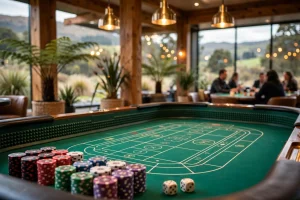
A live casino can feel more social than automated play because the dealer is present on screen and players can interact with them. But the interaction does not change the basic nature of the game: you are watching a broadcast and using the digital controls to join in. The dealer is there to run the table, not to turn the session into a one-to-one service.
The physical setup matters because it is the source of what you see. Real cards and a real wheel give the broadcast a tangible centre, while professional studios provide the setting for the dealer and the table. The software remains part of the experience, but it is not pretending to be the physical game. It carries the online session around a live event.
That also explains why a live dealer game may feel less like a standard screen game. In an automated game, the visuals and outcomes are presented through software without a visible dealer handling real equipment. In live play, the dealer’s actions are part of the event you follow. You see a real table being run, with the game delivered to your device as it unfolds. Different format, not just different graphics.
When you browse live casino games online, look past the label and ask what is actually being shown: a live feed, a professional dealer, and real equipment, or an automated presentation. That quick distinction tells you more than a glossy table design does. A screen can make either format look polished; only one is a broadcast of a real table.
For Kiwi players looking at a live casino, the defining feature is therefore not a particular visual theme or a promise of atmosphere. It is the connection between a real dealer working with physical equipment and your online view of that game. You are not sitting at the studio table, but you are following its play as it happens. That is the live part.
Blackjack, Roulette and Baccarat: How the Live Games Work
These three games ask you to make different kinds of decisions. Blackjack is a contest against the dealer, roulette centres on the wheel, and baccarat asks you to judge which of two hands will finish closer to nine. The house edge helps compare their underlying odds, but it does not predict what will happen in any individual hand or spin.
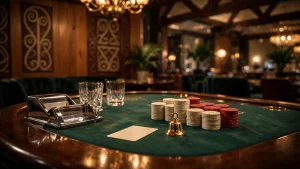
Blackjack: build a hand without going over
In live blackjack, you play against the dealer. The aim is to finish with a hand total higher than the dealer’s while staying at or below 21. Getting as close to 21 as you can is useful only if you do not go past it: a high total is no help if it busts.
That makes blackjack a game of managing risk as well as chasing a strong total. You are not trying to match another player at the table; your result is measured against the dealer’s hand. The basic objective is easy to grasp, though each turn can feel consequential when your total is already close to 21.
The live format can move more slowly than blackjack played against random-number-generator software. You may be waiting while other players take their turns, then while the dealer acts. If you are used to a quick sequence of automated hands, that change in pace is noticeable. No rush.
Roulette: the wheel decides
Roulette is built around the result of a spin. Unlike blackjack, you are not assembling a hand or trying to finish ahead of a dealer through a sequence of turns. The wheel determines the outcome, and the house edge differs between the European and American versions.
For live European roulette, the house edge is usually around 2.7%. For American roulette, it is around 5.26%. That difference matters when comparing the two formats: the stated edge is lower for European roulette. It describes the casino’s mathematical advantage over play in the long run, not a deduction from every bet and not a promise about your next session.
The distinction is worth noticing before you play. “Roulette” alone does not tell you which version is on the table, and the edge is not the same for both. The wheel may look like the main event, but the version changes the odds.
Baccarat: closest to nine wins
Baccarat is about predicting which hand will have the higher value: the player hand or the banker hand. The winning hand is the one closest to nine. You are judging the likely result between those two hands, rather than trying to build a hand yourself as you do in blackjack.
Blackjack
A contest against the dealer where you aim to finish with a hand total higher than the dealer's without exceeding 21.
Roulette
A game based on a wheel spin; European roulette typically has a house edge of 2.7%, while American roulette is around 5.26%.
Baccarat
A prediction game where you judge whether the player hand or banker hand will finish closer to nine.
The house edge depends on which side you back. For live dealer baccarat, it is around 1.06% on a banker bet and 1.24% on a player bet. Those figures are close, but not identical: the banker bet has the lower stated edge. The draw is another possible result, though the central objective remains to predict which hand finishes closest to nine.
That gives baccarat a fairly clean premise. You do not need to beat the dealer’s hand directly; you are predicting the stronger of the two hands. The edge figures help distinguish the bets, but they are not a forecast of how a particular round will end.
Comparing the three
The games reward different instincts. Blackjack asks you to manage your own total against the dealer’s. Roulette leaves the result to the wheel, with a meaningful difference in house edge between its European and American versions. Baccarat is a prediction about which hand comes closest to nine, with separate edge figures for banker and player bets.
If odds are your main comparison, the figures here give you a useful starting point: European roulette has a lower stated edge than American roulette, and the banker bet has a lower stated edge than the player bet in baccarat. Blackjack’s central challenge is different: keeping your total within 21 while finishing ahead of the dealer. Those are mechanics, not guarantees. A favourable edge still leaves each round uncertain.
Bitcoin at a Live Casino: Deposits, Payouts and Trade-offs
Bitcoin is a payment option, not a feature of the live table. If a live dealer casino accepts it, you use it to move funds between your wallet and your casino account; the cards, wheel or baccarat table are a separate matter. The practical question is whether the cashier’s terms suit the way you want to manage your balance.
A specialist review describes Bitcoin, Neteller and Skrill as methods that can offer fast deposits or withdrawals, while noting that limitations or fees may apply. Treat that as a report about the methods, not a promise about every casino. Payment options and conditions can differ between operators, and a method shown in a general guide may not be available in a particular cashier.
Before sending anything, open the payment section and check that Bitcoin is listed for the transaction you intend to make. Deposit and withdrawal options do not have to match. Read the displayed instructions rather than assuming that an option available for funding can also be used to cash out. If a term is unclear, check it with the operator before committing funds.
There are two balances to keep straight: the Bitcoin in your wallet and the balance displayed in your casino account. The cashier should explain how it handles the transaction and what value it credits. If the casino displays an NZD balance, check how the Bitcoin amount is valued for that transaction; many operators allow deposits and withdrawals in New Zealand dollars, but that does not establish the terms for every Bitcoin payment. Don’t guess from the figures on a table screen.
Do
- Check that Bitcoin is listed for the specific transaction in the cashier.
- Compare the planned send amount with the amount to be credited.
- Confirm the method's limits and fees before funding.
Don't
- Assume a deposit method is also available for withdrawals.
- Use Bitcoin addresses from old sessions or external sources.
- Rush a financial choice just because a live table is open.
Fees deserve the same attention. Look for any charge stated by the casino, and check whether the payment method itself has costs or restrictions. A headline saying “fast” tells you little about the amount you will receive or the conditions attached. Compare the amount you plan to send with the amount the cashier says will be credited, then pause if the difference is not clear. A small line in the payment terms can matter more than the button colour.
For a live session, it helps to set your casino balance before joining a table rather than treating a wallet transfer as part of the action. Keep your payment decision separate from your next bet. Live blackjack, roulette and baccarat all have their own pace; there is no need to rush a financial choice because a table is open. I’d check the cashier first, then decide whether the available method fits.
Bitcoin’s usefulness is therefore specific, not universal. It may suit a player who already uses it and wants a payment method that the casino supports. It may be less suitable if the listed fees, restrictions or transaction terms do not work for you. The word “fast” should not settle the choice on its own.
Keep a note of the transaction details shown by the cashier and the casino’s payment terms, especially if you are comparing the deposit and cash-out routes. If Bitcoin is not offered for the direction you need, choose only among the options the operator actually lists. Don’t send funds to an address copied from an old session or from somewhere other than the current cashier instructions; payment details should be checked at the point of use.
For me, the sensible order is plain: confirm the method is available, read its limits and fees, understand the credited value, then fund the account. That keeps a Bitcoin transfer from becoming an afterthought once you are already at the table. A payment option is only useful when its terms are clear before you use it.
Checking a Live Casino Site’s Licence
Before you deposit, check who regulates the live casino site and whether the operator’s licence can be verified. A badge in the footer is only a claim until you can match it to the named gambling authority. I would treat vague wording such as “fully licensed” as a prompt to look closer, not as proof.
Start with the operator’s own information. Find the legal company name and the name of the regulator it says oversees its gambling services. These details may be in the site’s terms or licensing information. Make sure the company name is specific enough to check; a trading name alone may not tell you which business is responsible for the account.
Next, check the regulator’s own information rather than relying on the casino’s description of its status. Look for a record that connects the same company to the licence being claimed. If the names do not line up, or the site does not identify a regulator clearly, pause before sharing payment or identity details. A professional-looking live stream does not settle the question of who is accountable for the service.
For Kiwi players, there is another check to make: ask the Department of Internal Affairs (DIA) to confirm the operator’s licence status. This is separate from checking whether an overseas gambling authority regulates the business. New Zealand does not issue a Kiwi-specific gambling licence, so an offshore site should not present a foreign authorisation as though it were a local one. The two checks answer different questions.
Verify Licence Status
-
1
Identify the operator
Find the specific legal company name and the named regulator in the site's terms or licensing info.
-
2
Cross-reference with regulator
Check the gambling authority's own records to ensure the company is actually connected to the claimed licence.
-
3
Confirm with the DIA
Ask the Department of Internal Affairs to verify the operator's status regarding the New Zealand licensing framework.
Keep the distinction clear. A licence from a recognised gambling body can indicate that an operator is regulated in the body’s jurisdiction. It does not, by itself, establish that the operator holds a New Zealand licence. And because the domestic licensing framework is changing, a statement about an operator’s status should be checked with the DIA rather than assumed from a site’s own wording.
If you cannot establish which company runs the site, which regulator it names, or what the DIA says about its status, do not fill the gaps with guesswork. Save the relevant pages and ask the DIA directly how to verify the operator. Be precise: give the company name shown on the site and the licence details it claims. That makes it easier to clarify whether you are looking at an offshore authorisation, a New Zealand status, or a claim that cannot be confirmed.
A sound check is not a guarantee that every part of a casino’s service will suit you. It is a way to avoid confusing a marketing label with a verifiable licence. The same care applies when a site advertises live casino games, a welcome offer or a no-deposit bonus: the promotion does not prove who regulates the operator. I would check the company and regulator first, then decide whether to go further. Boring, but useful.
If a site’s licence information is missing, contradictory or hard to verify, that is enough reason to step back. Do not let a familiar brand style, polished table presentation or confident support reply substitute for confirmation. The practical test is simple: identify the operator, check the stated gambling body, and have the DIA clarify the operator’s New Zealand licence status. If one of those parts remains unclear, you still have an unanswered question about who is overseeing the site.
Can You Play Live Casino Games Online from New Zealand?
Yes. Kiwi players can access live dealer games through international or offshore gambling sites. That answers the practical question of whether you can play live casino online from New Zealand: access is possible, and players are not prohibited from using offshore platforms.
That does not mean those sites hold a Kiwi-specific gambling licence. New Zealand currently has no domestic licensing framework for online casinos, so there is no local online-casino licence for an offshore operator to hold. The distinction matters: being able to open a site and join a live table is not the same as using a casino licensed by a New Zealand regulator.
I’d keep those two points separate when comparing options. One is access: can you reach the site and play? The other is oversight: which gambling authority, if any, regulates the operator? A site serving people in New Zealand does not become locally licensed just because it accepts Kiwi players or displays prices in NZD.
This is also why “online live casino NZ” can mean two different things in everyday conversation. It may describe live dealer games available to someone in New Zealand, or it may suggest a casino licensed specifically for the local market. The first is possible; the second does not describe the current domestic licensing position.
For you, the practical takeaway is straightforward: you may be able to play real live casino games at an offshore site, but access alone tells you little about the operator’s regulatory status. Check that separately before deciding whether to use the service. A familiar-looking site, a local currency option or a table streamed to your device is not proof of a New Zealand licence.
So, if you are looking for live dealer casinos available to Kiwi players, offshore sites are the relevant category. Just do not mistake availability for local licensing. They are different questions—and an easy distinction to miss.
Real-Money Live Play and the Limits of Free Tables
If you are used to opening a slot in demo mode, live dealer games can feel like a different proposition. Free play is not generally available at a live table. The reason is practical: keeping a table running costs the casino money, even before anyone places a bet.
A live game needs more than software to deal the next hand. There is a professional dealer, real equipment and a studio or casino setting, with the table shown through a live video feed. That is a staffed operation, not a digital game that can be simulated on demand at little additional cost. The casino has to cover those running costs somehow. Dry arithmetic.
That helps explain why a real live casino experience is usually tied to real-money play rather than offered as a free, open-ended demo. A free table would still need the people and setup that make the broadcast possible, while producing no wagers from its players. Casinos therefore tend not to offer live dealer games in the same way they offer free versions of automated games.
For you, the distinction matters before you join a table. If you want to see how a particular live game works without wagering, check what the site actually provides; do not assume that a demo option will be there. Free access may be limited or absent, and the presence of a live table does not mean you can use it without staking money.
I would treat a live table as real-money entertainment, not as a free practice room. If you are not ready to wager, an automated game’s demo mode may suit that purpose better. If you do decide to play, set your own spending limit before opening the table. That is a personal safeguard, not a feature of the game.
So the short version is simple: live dealer games are costly to operate, and free play is not the default. Check the table’s terms before you sit down. No surprises.
Placing Bets at a Live Table: Timing and Choices
At a live table, placing a bet is not an open-ended pause. Most games give you a limited window to make your choice, which keeps the round moving. That means it helps to decide what you want to do before the countdown is nearly over; scrambling at the last moment is an easy way to miss the chance to bet.
The exact choices depend on the game. In baccarat, you can back the banker, the player, or a draw. Those are bets on which outcome will occur, not three different ways to play your own hand. Once you have chosen, you place the wager during the available betting period. When that window closes, the table moves on to the round.
I find it useful to separate two decisions: first, which outcome you want to back; then, whether you are ready to place the bet before time runs out. That sounds obvious, but a live table’s pace can make a simple choice feel rushed, especially if you are still weighing the options as the timer ticks down. There is no need to treat every round as one you must join.
If you are new to a table, take a moment to understand the choices shown on screen before betting. In baccarat, keep the three outcomes clear: banker win, player win, or draw. You can then make your selection without confusing the outcome labels. A short betting window rewards being ready, not hurrying blindly.
The same broad timing point applies across live games: the betting period is limited, so each round moves along promptly. If you miss the window, wait for another opportunity rather than trying to force a decision. Better calm than hurried.
Live Tables on Mobile: What the Stream Changes
A mobile live table is not just a set of buttons on a screen. The dealer and table reach you through a live video feed, and that same feed lets you interact with the professional dealer. So the stream is part of the game, not decoration around it.
That changes what you need to pay attention to on a phone. You are following a real table through moving video, rather than watching an automated game run on its own. If the picture pauses or becomes difficult to follow, you may lose sight of what is happening at the table. A specialist review notes that live dealer games can encounter technical problems from time to time; it is a possibility to keep in mind, not a prediction that every session will have trouble.
I’d judge a mobile live casino by whether the stream stays clear enough for you to follow the table, rather than by claims about a particular app or extra features. If the feed is not coming through properly, there is little value in trying to read the table from a frozen image. Take a moment to check what is actually on screen before carrying on.
This matters most when you are relying on a small display and the video is your view of the live action. The basic point is simple: mobile play still depends on the broadcast reaching you. A live table can feel immediate when the feed is working, but the phone does not remove the technical link between the studio and your screen.
Keep that in mind when choosing where to play. The stream is the table’s window into your phone. No picture, no clear view.
How Long Live Casino Withdrawals Can Take
Withdrawal speed depends on the payment route, so a live casino fast withdrawal claim is worth checking against the method you plan to use. A specialist review reports that crypto payouts can clear in under an hour. The same review gives a range of 24 to 48 hours for POLi and e-wallets, while bank transfers are listed at 5 to 7 business days.
Treat those figures as reported timeframes, not a promise from every casino. They come from one specialist review, and payment services and operator processes can change. Before you request a payout, check the casino’s current terms for your chosen method; the timing quoted for one route does not tell you how quickly another will be handled.
The difference between the listed options is substantial: crypto is reported as the quickest, POLi and e-wallets sit in the middle, and bank transfers take the longest. If speed matters, compare the available routes before depositing rather than assuming every option has the same turnaround. Also check whether your account and payment method meet the operator’s requirements, since the cited timeframes do not guarantee that a particular withdrawal will arrive within them.
For Kiwis who prefer NZD payouts, many operators allow deposits and withdrawals in New Zealand dollars. That does not establish a faster timeframe; the reported timing still varies by payment type. Check the current withdrawal information before choosing.
Can New Zealand players play real-money live dealer games at offshore casino sites?
Yes, you can play live dealer games at offshore sites. Choose an operator regulated by a recognised gambling body and check its licence status with the Department of Internal Affairs.
Are live dealer games legal for NZ players now?
Yes, New Zealand players are not prohibited from accessing offshore live casino games. The domestic licensing transition began on 1 May 2026, and live tables are covered by the same licence category as other online casino games.
What changes on 1 December 2026?
From 1 December 2026, operators without a licence application must stop serving New Zealand players. Under the new rules, only approved operators may accept players, while providers with pending applications may continue during the transition without advertising.
Casino Games in New Zealand: Roulette, Cards & More
Content created by the «casinoslotsinfonz.com» team