
Understand the spin before you start playing
 Available in US
Explore how virtual slot outcomes are generated, what free modes let you assess, and which practical details matter before play.

How Online Slot Spins Work
A spin on an online pokie can look simple: you press the button, the reels move, and symbols settle into place. Behind that short animation, software decides the result. Virtual slot outcomes are determined by a pseudorandom number generator, usually shortened to PRNG. The display is the visible part; the number-generating process is what determines the spin.
“Pseudorandom” does not mean that the game is choosing a result because of what happened a moment ago. It describes numbers produced by software in a sequence that appears random. The game uses that process to determine an outcome, then presents it through the reels and symbols on screen. The animation may make the result feel like a little story unfolding, but it does not make the outcome more or less likely as the reels slow down.
That distinction matters when you play casino slots online for free or with money involved. A losing spin is not a signal that the next one is ready to pay. Nor does a win make the next result less likely to win. Each spin is independent: its result does not depend on the previous spin’s result. A game is not “due” a win after a run of losses.
If you’re exploring free online slots in New Zealand in 2026, this list gives you a concise reference point for considering where to play. Check the details that matter to you before choosing a casino.
-
7Bit Casino
- License
- Tobique Gaming Commission, licence no. 0000091
7Bit Casino lists a Tobique Gaming Commission licence, number 0000091.
-
N1 Casino
- License
- Malta Gaming Authority, licence no. MGA/B2C/394/2017
N1 Casino lists a Malta Gaming Authority licence, number MGA/B2C/394/2017.
-
Ricky Casino
- License
- Tobique Gaming Commission, licence no. 0000002
Ricky Casino lists a Tobique Gaming Commission licence, number 0000002.
-
Lamabet
- Payout speed
- 1-3 business days
Lamabet lists a payout speed of 1–3 business days.
-
BitStarz
- License
- Curaçao Gaming Authority, licence no. OGL/2024/165/0185
BitStarz lists a Curaçao Gaming Authority licence, number OGL/2024/165/0185.
-
Play Grand
- License
- Malta Gaming Authority, licence no. MGA/B2C/370/2017
Play Grand lists a Malta Gaming Authority licence, number MGA/B2C/370/2017.
-
Neospin
- License
- Tobique Gaming Commission, licence no. 0000064
Neospin lists a Tobique Gaming Commission licence, number 0000064.
-
Wintino
- Payout speed
- 1-3 business days
Wintino lists a payout speed of 1–3 business days.
-
Zotabet
- License
- 07017519840
- Payout speed
- 1-3 business days
Zotabet lists licence number 07017519840 and a payout speed of 1–3 business days.
I used to catch myself looking for a pattern in a string of results. A particular symbol had appeared several times, or a few spins had paid nothing, and it was tempting to treat that as a clue. It isn’t. A sequence can look meaningful to us without giving us useful information about the next independent outcome. The reels have no memory of your session.
What “independent” means at the screen
Imagine that you have just seen several losing results. It may feel as though a win should now be more likely to balance things out. But the game does not keep a tally and adjust the next spin to compensate. The next result is generated separately. The same is true after a payout: the game does not have to “take back” the win on the next turn.
This is easy to understand in principle and harder to remember while playing. When you watch a sequence unfold, your mind naturally connects one event to another. A near miss can feel like progress; repeated symbols can seem like a pattern forming. Neither changes the independent nature of the next spin. The screen is showing you results, not hints about what is coming.
This is also why a free online casino slot session cannot reveal a dependable sequence to follow later. Watching outcomes may help you understand what the game displays, but a short run of spins does not tell you what the next one will be. A result that appears frequently in one session is not a promise that it will appear again soon, and a result that has been absent is not waiting its turn.
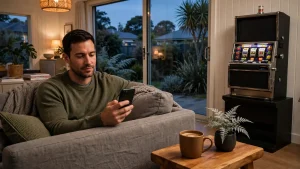
The animation is not a forecast
The moving reels are part of how a game communicates its result. They give the spin a beginning and an end, and make the symbols easy to follow. But the animation should not be mistaken for a live contest in which the reels are still deciding whether to stop on a win. The result comes from the game’s PRNG process; the visual sequence is how that result is shown to you.
That can feel counterintuitive because the animation invites you to watch each symbol pass. You may find yourself hoping that the last reel will land on the one symbol that completes a line. That moment can be exciting, but it does not mean you can influence the outcome by timing a click, waiting longer, or changing your rhythm. The spin is not a test of reflexes.
The same principle applies whether you open online free casino slots for a look or play a slot with a stake. The format of the session does not turn previous results into a prediction tool. Each spin remains its own event. If you are simply exploring, take the result at face value: it shows what happened on that spin, not what is likely to happen next.
Keep the session in perspective
A useful way to think about pokies is to separate what you can observe from what you cannot infer. You can see the symbols, the result, and how the game presents a win or a loss. You cannot read a “due” result from a losing streak, and a cluster of similar outcomes does not establish a reliable pattern.
That is worth remembering before a session starts, because it helps keep decisions grounded. If a run of losses makes you want to continue just to recover them, the idea that a win must be close is not a sound reason. The next spin is independent, not a correction for the last one. Set a maximum loss limit before you start, and stop when you reach it rather than chasing a result.
I find the simplest explanation is the best one: the software generates each outcome, and the past spin does not steer the next. The reels may keep moving. The odds do not remember.
What Free Play Lets You Try
Free play is useful when you want to understand how a pokies game works before deciding whether you enjoy it. In demo mode, you can explore the screen, follow what happens after a spin and see how the game presents its features, without putting money into that session. Think of it as a hands-on preview, not a way to build a balance for later.
I find that the first useful step is simply to look around before pressing anything. Notice where the spin control is, how the game displays its rules and where it shows the current stake. If the screen is busy, take a moment to work out which elements are controls and which are just decoration. That small pause can make a new game feel much less like guesswork.

A demo can also help you learn the rhythm of a game. You can see what the ordinary play screen looks like, how the game signals an event and whether it explains what has happened. Read the instructions as you go rather than assuming every symbol or animation means the same thing from one game to another. The point is not to memorise every detail; it is to get a clear enough feel for the game that you can decide whether it suits you.
Pay attention to how much information the game gives you. Some interfaces make the rules easy to find, while others take a bit of clicking around. Look for descriptions of the controls and any feature explanations. If something remains unclear, that is useful information too: you do not have to keep playing a game whose basic instructions are hard to follow.
Free play is also a low-pressure way to notice your own preferences. You might like a clear layout and a steady pace, or prefer a screen with more movement and interruptions. You can learn that without treating a demo result as a forecast of what would happen with money involved. A session is a chance to inspect the experience, not evidence that a particular outcome is likely to recur.
Keep the limits of the preview in mind. Demo mode can show a game’s mechanics, but it does not make every part of a real-money session available. Progressive jackpots, for instance, do not pay out in demo play. So if a game includes that kind of prize, a free session cannot show you a real jackpot result or establish what you might receive from one. It is better to understand the demo as a sample of the game, not a complete reproduction of every possible outcome.
That distinction matters when you are comparing what you see on screen with what you expected. A feature animation may be entertaining, but it is not a promise of a cash return. Likewise, a run of favourable demo results tells you only what happened in that trial. It cannot tell you what a later session would deliver. Treat the playthrough as a tour of the controls and presentation, rather than as a test that proves a game is generous.
You can make the preview more useful by setting a simple purpose before you begin. Perhaps you want to learn where the rules sit, see how a particular feature is explained, or decide whether the pace holds your attention. Once you have answered that, there is little value in clicking on just to make the session longer. The useful part is what you learn about the game, not the time spent in front of it.
There is no need to approach free online pokies as a training course. You do not have to master every screen or work out every possible result. If a game is confusing, slow down and check its help information; if it still does not make sense, move on. Demo play is most helpful when it lets you make an informed choice about whether you want to engage with a game at all.
For a newcomer, that is a modest but practical benefit: you can get familiar with the controls and understand the way a game communicates before making any decision about playing for money. Just keep the boundary clear. Free play is for trying the mechanics and seeing whether the experience appeals to you. It does not turn a demo session into a route to cash winnings.
Slot Styles: Reels, Features and Volatility
Pokies can look quite different from one game to the next. The reel layout gives you a quick clue about the style, while volatility describes the broad pattern of its payouts. Those are separate things: a game’s format tells you what you’ll see on screen; its volatility gives you an idea of how wins tend to be distributed.

Classic pokies
Classic pokies keep the layout simple, with three reels. Their familiar, uncluttered setup can make it easier to follow what is happening without learning several feature rules first. They typically pay smaller wins more often than high-volatility titles.
That does not mean every spin will produce a win, or that a run of small payouts can be counted on. The useful distinction is about the general pattern: classic pokies tend towards smaller, more frequent wins compared with games at the high-volatility end. “More often” is a comparison, not a promise about the next spin.
If you prefer a straightforward layout, three reels may be all you need. I find it helps to judge a game by what it actually puts in front of you, rather than assuming that a simpler screen must mean a particular result. Simple is a format, not a forecast.
Video pokies
Video pokies typically use five reels and can include wilds, scatters and free spins. These features give the game more ways to change what appears on the screen than the classic three-reel format. A wild is a symbol type; scatters and free spins are other features you may encounter. Their presence tells you about the game’s mechanics, not how often you will win.
Classic pokies
Simple three-reel layout typically paying smaller wins more often than high-volatility titles.
Video pokies
Five-reel games featuring wilds, scatters, and free spins for more varied screen outcomes.
Megaways
Dynamic reel structures where the number of symbols changes per spin, offering up to 117,649 ways to win.
Before starting a video pokie, take a moment to see what its symbols and features do. That little bit of reading can make the screen easier to follow when something happens. A free-spin feature, for instance, is part of the game’s design; it does not by itself tell you whether the overall game is low or high volatility.
Five reels and extra features can make a game feel busier, but visual activity and payout pattern are not the same measure. A packed screen can still have a quieter payout pattern, and a plain one can still vary. Keep those ideas separate.
Megaways
Megaways games change how many symbols appear on each reel from spin to spin. As a result, the number of possible winning ways can vary between turns too. Some titles in this format can offer as many as 117,649 ways to win on a single spin.
That figure describes the possible ways to form a win, not a guarantee of winning or a measure of how much a game pays. A larger set of possible combinations can make the layout change noticeably from one spin to another. If you are comparing formats, focus on that changing reel structure rather than treating a high ways-to-win figure as a promise.
Megaways is a format, just as three-reel and five-reel layouts describe formats. It does not, on its own, tell you whether a title has low or high volatility. Check the game’s information for that distinction instead of guessing from the reel display.
Low and high volatility
Volatility is about the shape of a game’s payout pattern. Low-volatility pokies tend to pay out regularly in smaller amounts. High-volatility pokies can have longer quiet stretches, with larger payouts when wins do occur.

That difference matters if you are choosing a style for a particular session. A steadier pattern of smaller payouts may feel quite different from waiting through longer spells without a win. Neither description means you can predict what will happen in a short session. High volatility does not mean a large win is due, and low volatility does not mean a payout will arrive on schedule.
I treat volatility as a description, not a strategy. It can help you understand the kind of variation a game is associated with, but it cannot make one outcome more certain than another. A three-reel classic pokie, a feature-heavy video pokie and a Megaways game each describe a different format; volatility is a separate way of describing payout behaviour. Keep that distinction in mind when comparing pokies, and choose the style you actually want to play.
A Few Things to Check Before You Play
RTP is useful, but only if you read it for what it measures. It describes the share of stakes a game pays back across its entire lifetime. It is not a promise about what you will receive in one session, and it cannot tell you how a particular run will go. I treat it as a broad comparison point, not a forecast.
That distinction matters when you are looking at figures beside pokies. A higher stated RTP may look decisive, but it does not mean every player gets that return, or that two people playing the same game will see similar results. The measure is long-run. Your own play is a small part of that picture, so a brief session can land well above or below the stated rate. The number is not a personal estimate.
Do
- Check that the RTP refers to the specific game you have open.
- Verify if a payout audit identifies the specific game or group covered.
Don't
- Assume a general casino RTP figure applies to every title.
- Treat a long-run RTP percentage as a personal estimate for one session.
If you are reading game information before choosing where to play, check that the RTP refers to the specific game you have open. Avoid assuming that a figure mentioned in general casino copy applies to every title. The useful question is not simply whether a percentage appears somewhere on a page, but what game it describes and how clearly that connection is made. If the detail is vague, do not fill in the gaps yourself.
Some casinos say their pokies have higher payback percentages and publish payout audits on their websites. An audit can give you more to examine than a bare claim, but its presence alone is not a reason to treat every statement around it as proven. Read the material carefully: does it identify the payout figure being assessed, and does it make clear which game or group of games the information covers? If the page gives you no way to connect the audit to the claim, the claim remains difficult to assess.
I would also keep the wording in perspective. “Higher” needs a comparison to mean much; it is not a standalone measure of how a session will feel. An audited figure still describes long-run returns, not the next spin or a particular player’s result. That is the part worth remembering when a marketing line makes the number sound more immediate than it is. A report is useful context, not a crystal ball.
Progressive jackpots work on a different scale from a game’s ordinary payout information. Each spin on a participating casino contributes to a shared pot for that game. In other words, the pool is built across casinos running it, rather than from one player’s session alone. That shared structure helps explain why a progressive jackpot can be presented separately from the usual game details.
When checking a progressive game, look for the information that explains what the displayed jackpot refers to. Do not read the amount as part of a guaranteed return, or as a clue that a win is near. The fact that spins feed the shared pot says how it grows; it does not tell you when it will be won. A large pool is eye-catching, but it is still a jackpot feature, not a reliable guide to what your own play will return.

The same care applies if you are browsing free online pokies before deciding what information matters to you. A displayed RTP may help you understand the game’s long-run return profile, while an audit may provide supporting payout information. Neither turns a short session into a predictable result. Keep those ideas separate: one is a long-term measure, one may be evidence for a stated figure, and the progressive pot is a shared feature fed by spins across participating casinos.
My simple check is to read the game information, trace each claim to the game it describes, and resist treating any figure as a personal promise. That keeps the numbers in their proper place.
Online Slots in New Zealand: The 2026 Licensing Shift
New Zealand’s online casino rules are changing, but the shift is a transition rather than an instant switch to a fully licensed market. The Online Casino Gambling Act 2026 created the country’s first domestic licensing framework for online casino gambling and came into force on 1 May 2026. The Department of Internal Affairs (DIA) is responsible for regulating that framework.
Industry coverage had previously described the licensing rollout as expected from 2026. The law now sets out a transition period: providers that were already serving people in New Zealand before the Act took effect may continue until 1 December 2026, subject to the transitional provisions. The full licensing regime is not expected to be operational until 2027. So, during 2026, the legal position depends in part on when a provider began operating here.
That timing matters if you are trying to understand what “licensed” means on a page about free online slots in New Zealand. The new framework does not mean every online casino available to New Zealanders already holds a domestic licence. Nor does a site’s claim about its status, on its own, establish that it has one. I would read claims about licensing against the transition dates, rather than treating “2026” as a neat dividing line.

There is an important distinction between the operator and the player. Under the Gambling Act 2003, operating an online casino from within New Zealand has been illegal. The law’s target is the business running the casino here, not an individual who plays on a site. New Zealand’s rules have also prohibited domestic online casinos; the new Act establishes a route to domestic licensing rather than making the old position disappear overnight.
Before the 2026 Act, offshore online casino gambling was not licensed or supervised by a New Zealand regulator. That left customers without domestic government recourse if a dispute arose. The new framework changes the regulatory structure, but the transitional period means you should not assume that every provider serving New Zealanders has already moved into the full licensing system.
The DIA’s role is to oversee the licensing framework, not to turn every page offering free pokies into an approved service. Free play may not involve a cash stake, but the rules described here concern online casino operators and the market they serve. A demo screen is not proof of a provider’s licensing status.
For me, the practical point is simple: check the date and the precise claim. A provider operating during the transition may be relying on transitional permission, while the full regime is still being put in place. In this market, the calendar matters.
Browser Play or a Download?
The main difference is where the casino software runs. A web-based casino lets you open its games without installing a program on your computer. A download-based casino requires you to install a software client before you can play and wager.
That distinction is useful when you want to play without a download. With a web-based service, you access the games through its website rather than first adding a casino application to your computer. There is no local client to install as part of that route. A download-based service works differently: installing its client is part of getting access to the games and wagering.
It’s a practical difference, not a promise about the experience. “Browser play” tells you that you do not need to install casino software locally; it does not, by itself, say anything about the games, their terms or whether a session is free. Likewise, a downloadable client describes the access method, not the kind of play available.
Difference between Browser and Download
A web-based casino allows you to open games through a website without installing any software. In contrast, a download-based casino requires you to install a local software client to access games and wagering.
I’d check which route a site actually requires before setting anything up. If it asks you to download a client, it is not a no-download option, even if the site also has pages you can view in a browser. If it lets you open casino games without installing software on your computer, it fits the web-based description.
This also helps separate the question of free play from the question of software. A browser-based casino may be the format you have in mind when looking for pokies you can open without a local installation, but “in a browser” does not automatically mean “free”. Check what the game itself offers rather than treating the access method as an answer about payment or winnings.
There is no need to install a client just to satisfy the idea of playing online: web-based casinos are specifically the option that allows game access without downloading software to your computer. But where a service requires its client for play and wagering, the download is part of how that service operates. That’s the whole distinction.
Read the Bonus Terms Before You Accept
A bonus can look like extra play, but it often comes with a condition attached: you must wager a specified amount before you can withdraw. That applies to casino bonuses generally, so a welcome offer is not automatically cash you can take out. Read the rules before opting in, rather than finding the catch when you try to withdraw.

A specialist review puts welcome-bonus wagering requirements commonly in the 30x to 50x range. The multiplier tells you how much wagering is required against the amount specified in the offer; check the wording to see exactly which amount it applies to. Do not assume that a bonus is cleared just because you have played through its face value. The terms set the condition.
The same review describes NZ$5 per spin as a typical maximum bet while a bonus is active. Treat that as a prompt to check the specific offer, not as a limit that applies everywhere. If you exceed the maximum stated in the terms, you may put the bonus or related winnings at risk. It is an easy detail to miss when you are focused on the game.
For offers advertised alongside free online pokies with no deposit, separate the headline from the conditions. “No deposit” describes the offer’s entry point; it does not, by itself, tell you whether winnings can be withdrawn or what requirements apply. Check the wagering rule, the permitted games and any bet cap before accepting. If the offer does not explain these clearly, leave it alone.
I would also check when the requirement begins and what counts toward it. A bonus can make a session feel like ordinary play, while the terms still govern what you can do with the funds. Read first. Then decide whether the offer is worth the restrictions.
Free Slots for a Casual Session
Sometimes you want a few minutes of play without turning it into a money decision. Free pokies can suit that kind of casual session: you can enjoy the sounds, watch the reels and see how a game behaves without staking cash. Keep the distinction clear, though. This is entertainment, not a way to earn or build towards a payout.
I find it helps to treat a free session like trying a game at an arcade. There is no need to keep playing because a win feels close, and no reason to extend the session to recover anything. You can stop when the game stops being enjoyable. That is the whole point.
Use demo mode to explore
Demo mode is useful when you want to get a feel for a game before deciding whether you like it. You can try its controls, follow what happens when features appear, and see how a round progresses without placing a cash stake. If the screen is busy or the rules are not obvious, take a moment to read the game’s own instructions rather than tapping through blindly.
That small bit of exploration can make a casual session more satisfying. You might discover that a game’s pace suits you, or that its features are harder to follow than they first looked. Either way, you have learned something about the experience without needing to wager.
There is a limit to what demo play can show. Progressive jackpots do not pay in demo mode, even if the game displays a jackpot meter or a prize amount. Treat those displays as part of the game presentation, not as a prize you can collect while playing for free. No jackpot surprise there.
Keep the session genuinely casual
It is easy to let a quick diversion become a longer session, especially when the game keeps presenting another spin. I try to decide what I want from a free session before starting: perhaps I want to see how a feature works, or simply pass a little time. Once that purpose is done, I close the game.
If you move from free play to wagering, pause first. Set a maximum loss limit before you begin and do not raise it to chase losses. The session is optional; money spent is not something the game owes back. Free play is at its clearest when you do not blur it with a plan to win cash.
Adults only. Keep gambling within the legal age requirement, and treat any paid play as a separate choice from a no-stakes demo. A free session does not need a deposit, a target or a winning system. It can just be a way to unwind and see whether a game is enjoyable.
A good demo session leaves you knowing what the game feels like, not feeling that you have to continue. Try a feature, enjoy the design if it appeals, then leave it there. That is casual play, kept casual.
Free Play and Real-Money Winnings Are Different
A free-play session cannot, by itself, make you eligible for a cash prize. The spins use a no-stakes format: any credits or outcomes shown in the game are part of that session, not a balance you can withdraw. If you later play for money, that is a separate activity under the casino’s terms. Keep the distinction clear; a demo result does not turn into real winnings.
I’d treat free play as a way to enjoy the game without expecting a payout. If a site describes a prize or promotion connected to free spins, read the conditions for that offer separately. The fact that a game can be played for free does not mean its free version pays money, or that a result from it carries over to paid play.
For real-money gambling in New Zealand, the tax point is straightforward: gambling winnings are not taxed. That does not make free-play credits taxable winnings, because they are not cash winnings in the first place. Nor does the tax treatment change the difference between a no-stakes session and wagering real money.
So if you are wondering whether free online casino pokies can win real money, the important distinction is the mode you are playing. Free play is for entertainment; it does not establish a claim to a cash payout. Real-money play is separate, and any withdrawal depends on the applicable terms. Keep those two situations apart.
Are online pokies legal in New Zealand?
The Gambling Act 2003 makes it illegal to operate an online casino from within New Zealand. The law targets operators rather than players.
Will online gambling winnings be taxed in New Zealand?
No, gambling winnings are not taxed in New Zealand.
When will New Zealand launch online casino licenses?
The domestic online casino licensing regime is expected to be in place from 2026.
How many NZ online casino licenses will be available?
The regime is expected to initially allow up to 15 online casino licenses.
Slots in New Zealand: Online Pokies and Casinos
Content created by the «casinoslotsinfonz.com» team