
Know What a Spin Can—and Can’t—Tell You
 Available in US
A guide to slot mechanics and the game, bonus and withdrawal terms that matter when comparing online casinos in New Zealand.

What a Slot Spin Can—and Can’t—Tell You
When you play a virtual pokie, the result is determined by pseudorandom number generator software. The name sounds technical, but the practical point is simple: the game uses software to produce outcomes that appear random. A spin’s result is not a message about what the next one will do.
That matters when you’re playing all kinds of online casino games and trying to read a run of results. Several losses in a row can feel like a pattern, especially when you have been watching the reels closely. But each spin is independent. The game does not remember that you have lost, and it does not owe you a win to balance things out.
I used to find it tempting to treat a losing streak as evidence that a win must be close. It isn’t. The previous result does not make the next spin more likely to pay, and a recent win does not mean the next one must be a loss. The sequence can look meaningful to us without giving us a reliable way to predict what comes next.
Choosing a slots casino in New Zealand for 2026 means checking the details that matter to you before you play. This list gives you a concise reference point for reviewing the available information.
-
7Bit Casino
- License
- Tobique Gaming Commission, licence no. 0000091
7Bit Casino lists a licence from the Tobique Gaming Commission, licence no. 0000091.
-
N1 Casino
- License
- Malta Gaming Authority, licence no. MGA/B2C/394/2017
N1 Casino lists a Malta Gaming Authority licence, no. MGA/B2C/394/2017.
-
Ricky Casino
- License
- Tobique Gaming Commission, licence no. 0000002
Ricky Casino lists a licence from the Tobique Gaming Commission, licence no. 0000002.
-
Lamabet
- Payout speed
- 1-3 business days
Lamabet’s stated payout speed is 1–3 business days.
-
BitStarz
- License
- Curaçao Gaming Authority, licence no. OGL/2024/165/0185
BitStarz lists a Curaçao Gaming Authority licence, no. OGL/2024/165/0185.
-
Play Grand
- License
- Malta Gaming Authority, licence no. MGA/B2C/370/2017
Play Grand lists a Malta Gaming Authority licence, no. MGA/B2C/370/2017.
-
Neospin
- License
- Tobique Gaming Commission, licence no. 0000064
Neospin lists a licence from the Tobique Gaming Commission, licence no. 0000064.
-
Wintino
- Payout speed
- 1-3 business days
Wintino’s stated payout speed is 1–3 business days.
-
Zotabet
- License
- 07017519840
- Payout speed
- 1-3 business days
Zotabet lists the identifier 07017519840 and a payout speed of 1–3 business days.
The same principle applies whether you’re trying a familiar game or exploring a new one. A few spins can show you what the game looks and feels like, but they cannot tell you what its next result will be. Nor can a short session establish a dependable pattern. Random sequences can include clumps of similar outcomes; that does not make them a forecast.
So, if you’re playing real-money pokies, make your decisions around what you are prepared to spend, not around a belief that the machine is “due”. Set a maximum loss limit before you start, and stick to it. If you reach it, stop rather than raising your stake to chase losses. That is a choice you control; the spin result is not.
This is the useful distinction: a result tells you what happened on that spin, and nothing dependable about the next. Keep that in mind when a game feels hot or cold. The feeling can be strong. The prediction is still guesswork.
Pokies by Style: Reels, Megaways and Volatility
A pokie’s layout tells you something about how its features are arranged, but not how often you will win. I find it useful to separate two ideas: the game’s format—its reels and features—and its volatility, which describes the general pattern of payouts. They can shape the feel of a game in different ways.
Classic, video and Megaways formats
Classic pokies use three reels. Their simpler layout is often paired with smaller wins that arrive more regularly than in high-volatility games. That can make a session feel less stop-start, but it does not mean every spin pays, or that a small win will cover what you have staked.
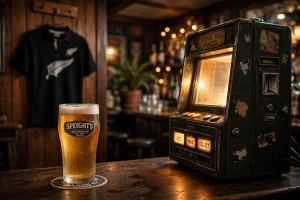
Video pokies typically use five reels and may include wilds, scatters and free spins. These features add different ways for symbols to interact: a wild can substitute for other symbols, while scatters can trigger a feature such as free spins. The exact rules depend on the game, so I check its paytable and feature notes before playing rather than assuming that familiar symbols behave the same way everywhere.
Megaways games change the number of symbols shown on each reel from one spin to the next. That changing layout affects the possible combinations, and some titles offer as many as 117,649 ways to win on a single spin. A large ways-to-win figure describes possible combinations, not a promise that a spin will produce a payout. It is easy to mistake a busy screen for a generous game. Not the same thing.
These formats are not a ranking from simple to best. A three-reel game may suit someone who wants a direct layout; a video pokie may appeal if they enjoy feature rounds; and a changing-reel Megaways game may feel more involved. The details on screen matter more than the label. Take a moment to see what counts as a win and how a feature is triggered.
What volatility changes
Volatility is about the rhythm and size of payouts, not the reel count. Low-volatility pokies tend to pay out more regularly, but in smaller amounts. High-volatility games can have longer quiet stretches, with larger payouts when wins arrive. Neither description tells you what will happen in a particular session.
Low Volatility
Pays out more regularly, but usually in smaller amounts.
High Volatility
Can have longer quiet stretches, but offers larger payouts when wins arrive.
That distinction matters when choosing a game for entertainment. If frequent small payouts help you enjoy the session, a lower-volatility title may feel more comfortable. If you prefer a game with the possibility of larger wins and can tolerate longer gaps between them, you might find high volatility more appealing. That is a preference, not a way to predict a result.
Reel style and volatility can overlap, but one does not automatically determine the other. A video pokie is not necessarily high-volatility just because it has several features, and a simple-looking game is not necessarily low-volatility. Look for the game’s own description of volatility where available, then treat it as a broad guide rather than a guarantee.
Before you start, set a maximum loss limit and stop when you reach it; don’t raise it to chase a quiet run. Gambling is for people who meet New Zealand’s minimum legal age requirement. Keep the session within the limit you chose, and pick the format whose pace you actually enjoy—not the one with the flashiest number on its screen.
Reading RTP Without Treating It as a Promise
RTP means Return to Player: the share of wagers a game is designed to pay back across its entire lifetime. It is a long-run measure, not a forecast for your next session. A high RTP figure does not mean you will get that share back today, or that a particular run of play will come out ahead.

That distinction is easy to lose when you are comparing pokies. A percentage looks precise, so it can feel like a promise attached to the game. It isn’t. RTP describes the game’s overall theoretical payback over a very large volume of play; your own results can differ. I treat it as one useful point of comparison, not a reason to expect a particular result.
You may also see casinos claim that some of their slot games offer higher RTPs, or publish payout-percentage audits on their websites. An audit can add context to a published claim, but read what it actually covers: the figure relates to payout performance, not a guarantee for each player. Nor does a casino’s general claim tell you that every game on its site shares the same RTP.
When you encounter a figure, check that it is tied to the specific game you are considering and look for the casino’s explanation or audit details. Avoid comparing a broad site-wide claim with a game-specific figure as though they measure the same thing. If the information is unclear, the sensible response is to treat the comparison as inconclusive.
RTP can help you compare published game information, including when weighing up popular casino slots. It cannot identify a sure winner, turn a high figure into a reliable short-term return, or tell you what will happen in your own play. Keep it in its lane.
Free Slots: A No-Stakes Way to Try the Mechanics
A demo can be a useful first stop when you want to understand how a pokie works without wagering. It lets you explore the game’s mechanics before deciding whether its pace and features suit you. Think of it as a way to look around, not a preview of what real-money play will pay.
That distinction matters. A free-play session can show you how the game is laid out and how its features are presented, but it cannot tell you what a future paid session will bring. The point is familiarity: you can take your time, follow what happens on screen and decide whether you enjoy the experience without putting a stake at risk.
What to pay attention to
Start with the basic controls and the information the game gives you. If a feature is unfamiliar, look for its explanation in the game’s rules or help panel. You can use demo mode to see how the interface responds and how the game presents its mechanics. There is no need to rush through the screens just to get to a result.
I find it helpful to treat a first session like a test drive. Notice whether the layout is easy to follow and whether the feature descriptions make sense to you. If the game has several elements to learn, pause between spins and check what the game says each one does. You are not trying to prove that the game is generous; you are working out whether you understand it and find it enjoyable.
This is especially useful if you have not played that particular game before. A familiar-looking screen does not mean every game behaves the same way. A few minutes in demo mode can help you see where the rules are explained and how the game communicates its features. If the instructions remain unclear, that is useful information too.

Free play is not a forecast
It is easy to read too much into a short run of free spins. A demo session is not evidence that a game will behave similarly when you wager, and a pleasing result does not make a later paid session more likely to match it. Use the free version to learn the interface and mechanics, not to estimate future returns or set expectations for a cash session.
That also means there is little value in treating demo play as a test of whether a game is “ready” to pay. It is a way to explore the game, not a way to find a reliable pattern. If you catch yourself trying to turn a handful of free results into a prediction, step back. That is more certainty than the session can offer.
Free casino slots can be entertaining in their own right, and some people use them simply for fun. You can explore without wagering, stop when you have had enough and move on if the game is not for you. The lack of a stake does not make every session worthwhile, though; if you are bored or frustrated, there is no reason to keep clicking.
One important exception
Progressive jackpot games work differently in demo mode: their jackpots do not pay out there. A practice session may let you see how the game is presented, but it does not give you access to a real progressive prize. Keep that limit in mind if the jackpot is the main reason you chose the game.
That is worth remembering before you spend time trying to assess a progressive game through its free version. Demo play can still help you get a feel for the mechanics, but it cannot reproduce the real-money jackpot outcome. No jackpot in demo. Clear enough.
When you are browsing free casino games, check that the game is actually in demo mode before you start. The aim is to explore without wagering, so do not assume a screen is a free version just because it looks like a game preview. Read the on-screen prompts and stop if you are unsure whether you are about to place a stake.
If you are playing for fun, keep the session in that lane. A free version is not a promise of winnings, a way to unlock a prize or a reason to move into paid play. You can close it whenever you like. Adults only; make sure you meet the applicable minimum age before gambling.
The useful question is simple: did the demo help you understand the game, and did you enjoy trying it? If yes, you have learned what you came for. If not, there are plenty of other games to explore without turning a casual test into a money decision.
Playing for Fun: Bonus Buys and Their Cost
A bonus buy skips the usual route into a game’s bonus round. Instead of waiting for the feature to appear during ordinary play, you pay a set multiple of your stake to enter it directly. It is a shortcut, not a separate free feature: the purchase itself can cost far more than a standard spin.

The price depends on the game. One specialist review reports bonus-buy costs ranging from 50 to 100 times the stake. Treat that as a figure reported by that review, not a fixed price across pokies. The game’s own information should tell you the cost before you confirm the purchase.
The multiplier is easy to underestimate when you are looking only at the stake you normally use. If a game charges 50 times the stake, a stake of one unit means paying 50 units for the feature; at 100 times, it means 100. The arithmetic is simple. The resulting cost may not feel simple once it comes out of your balance.
That is why I would check the purchase price before getting caught up in the promise of seeing a bonus round straight away. A feature can be entertaining to watch, but paying to reach it does not make it more likely to return what it cost. The bonus round may be the main attraction; the buy price is still part of the play.
If you are looking for free casino slots to play for fun, keep the distinction clear: a bonus buy is a paid entry mechanism, not a free-play option. It is also different from trying a game’s regular spins. You are choosing to spend a larger amount at once in exchange for immediate access to a feature, rather than letting the game determine when that feature appears.
Before you play casino slots with a bonus buy, decide what you are comfortable losing and set that as your limit. Do not raise your stake to recover a purchase that did not go your way. If the price would make you annoyed or uneasy, skip it; there is no need to buy access to every part of a game. Adults only.
For me, the useful question is not whether the feature looks exciting. It is whether its cost fits the amount I planned to spend before opening the game. If not, leave the button alone. A bonus round is optional. The bill is not.
Slot Bonuses: Check the Wagering Before You Accept
A welcome bonus can make the balance on your screen look larger, but bonus funds are not the same as cash you can freely use. Before you accept an offer, find the rules for wagering, eligible pokies, the maximum stake and expiry. If those details are hard to find, pause. The headline is the easy part.
A specialist review source reports welcome-bonus wagering requirements in the range of 30x to 50x. The multiplier tells you how much qualifying play is required against the amount specified in the offer’s terms. Check whether it applies to the bonus, the deposit, or both; that detail changes the calculation. Don’t assume a bonus can be cleared quickly just because the requirement is stated as one figure.
The games you choose matter too. Specialist reviews report that pokies may contribute their full stake towards wagering, while some titles can be excluded or count for less. Look for the eligible-games list and any contribution table before you play. A game that appears in the casino lobby is not automatically eligible for a particular offer.
Pay attention to the maximum bet while bonus funds are active. A specialist review source reports a common cap of NZ$5 per spin, but the operator’s own terms are what you need to follow. Going over a stated limit may put the bonus or related winnings at risk. If you switch games or change your stake, check that you are still within the offer’s rules.
Expiry is another easy-to-miss condition. Specialist reviews describe bonus-fund periods ranging from 7 to 30 days, depending on the site. Check when the clock starts and what happens when the period ends. A short window can make a large wagering requirement difficult to complete, even if the offer initially looks generous. No rush is worth guessing.
When you sign in to a slots casino, look for the full bonus terms before activating anything. Read the conditions alongside the offer, not after you have started playing. Confirm which funds are used first, which pokies qualify, whether there is a maximum stake, and when the offer expires. If a condition is unclear, ask the operator to explain it before you accept; a vague banner is not a substitute for the rules.
I’d compare the restrictions before comparing the size of the bonus. A smaller offer with clear terms may be easier to assess than one that hides its limits in dense wording. Keep the terms available while you play, and set a loss limit before starting. A bonus is optional. The conditions are not.
Choosing a Licensed Casino in New Zealand
New Zealand is moving from an offshore online-casino market to a domestic licensing system. That change matters when you are comparing places to play: a website that accepts New Zealand customers is not automatically licensed here, and the new framework does not mean every casino site has local approval.
The Online Casino Gambling Act 2026
This Act created New Zealand's first domestic licensing system for online casino gaming, taking effect on 1 May 2026, with the Department of Internal Affairs (DIA) acting as the regulator.
The Online Casino Gambling Act 2026 created the country’s first domestic licensing system for online casino gaming and took effect on 1 May 2026. The Department of Internal Affairs (DIA) is responsible for the framework. In practical terms, the DIA is the regulator to look to for information about licensing, rather than relying on a casino’s own description of its status.
There is a transition period, not an instant switch. Online casinos that were already serving people in New Zealand before the Act began may continue operating under its transitional provisions until 1 December 2026. That permission applies to those existing providers during the transition; it should not be read as a general opening for any new site to begin targeting New Zealand customers.
The distinction is easy to miss when a website uses familiar language such as “licensed” or displays an overseas licence. Before the new regime, online casinos based offshore were not licensed or supervised by a New Zealand regulator. An overseas licence and a New Zealand licence are not the same thing. Nor does an operator’s claim that it is “available in NZ” establish that it has domestic approval.
What the rollout means
The transition is intended to lead to a fully functioning licensing system, but that point is not expected until 2027. A specialist market review has described the initial framework as allowing up to 15 online-casino licences, with the rollout expected to begin in 2026. Treat those as rollout expectations, not as proof that a particular operator already holds a licence. The number of licences expected at the start does not identify who will receive one, or when each approval will be granted.
For you, the useful distinction is between three stages: the earlier offshore market, the temporary continuation allowed for existing operators, and the eventual licensed market. A site’s presence during the transition does not by itself tell you which stage or permission applies to it. Look for a clear statement of its New Zealand status and confirm that status through the DIA’s official information when the licensing register is available. Do not rely on a badge or a general claim about regulation without checking what it refers to.
This is a change in oversight, not a promise that every licensed casino will feel identical or suit every player. Licensing tells you that an operator has been approved within the local framework; it is not a guarantee of a particular experience. I would separate those questions rather than letting a polished page answer both at once. Paperwork is not a personality test.
The new system also should not be confused with the rules that applied before it. Under the earlier arrangement, offshore online casino gambling had no New Zealand regulator supervising it, and customers had no domestic government recourse in a dispute. The transition provisions create a defined, temporary allowance for qualifying operators already in the market; they do not turn the earlier offshore licences into New Zealand licences.
Do
- Check the DIA's current guidance
- Verify an operator's specific New Zealand status
Don't
- Rely on overseas licences as domestic approval
- Trust search rankings or branding as proof of licensing
When assessing a casino during the changeover, keep the question narrow: is this operator permitted under the New Zealand framework at this point in the rollout? Avoid treating search rankings, familiar branding, or an overseas approval as an answer. The regulatory position is changing on a fixed timetable, so an old page or saved link may describe a previous stage. Check the DIA’s current guidance rather than assuming that a statement written before the Act took effect still applies.
The direction is clear, even if the rollout takes time: New Zealand is establishing domestic oversight for online casinos, with the DIA administering the licensing framework and the full system expected to become operational in 2027. Until then, the transitional rules matter. Keep those categories separate, and you are less likely to mistake access to a site for approval under New Zealand’s new system.
Online Casinos and the New Zealand Context
The key distinction in New Zealand’s older gambling law is who it targets. The Gambling Act 2003 made it illegal to run an online casino from within the country; its focus was the operator, not the person placing a bet. So a rule against domestic casino businesses should not be read as a rule making players criminally liable simply for playing.
That distinction mattered because online casino sites based overseas could still be reached by people in New Zealand, even though the country had not licensed or supervised those services under its former arrangement. During that period, a customer using an offshore site had no domestic government recourse if a dispute arose. Access and local oversight are not the same thing. That is worth keeping in mind when you see “available in New Zealand” presented as if it automatically meant “regulated here”.
The position has since begun to change. The Online Casino Gambling Act 2026 created the first domestic licensing framework for online casino gaming, taking effect on 1 May 2026. A transition runs from that date to 1 December 2026: casinos already serving New Zealand customers before the Act began may continue operating during that window. The full licensed system is expected to be operating in 2027. This newer framework does not erase the basic distinction in the 2003 Act; it changes how online casino services are to be overseen.
For you as a player, the practical point is to separate the law’s treatment of an operator from the protections available to a customer. The earlier law did not make the player the target for using an offshore casino, but it also did not give that customer local government recourse. With the new framework taking shape, the regulatory position depends on the transition and the operator’s status under it. Legal access alone is not a guarantee of a remedy.
Tax is a separate question. Gambling winnings are not taxed in New Zealand. That does not turn a casino balance into a guaranteed return, nor does it tell you whether a particular site is properly covered by the current rules. It simply means a player’s gambling win is not treated as taxable income under the stated New Zealand position. I’d keep those points apart: operator rules govern who may provide the service, while tax treatment concerns what happens to winnings. Easy to muddle.
Browser Play or a Downloaded Casino Client?
The main difference is where the casino software runs. With browser play, you open the site and can play casino games without downloading software to your computer. A download-based casino asks you to install a separate client before you can play and wager.
If you want casino slots without a download, browser play is the direct option. There is no client to install first; you access the games through the casino’s website. That can make the starting point simpler when you do not want additional software on your computer.
A downloaded client adds a step. You need to get the software and install it before playing. If you would rather keep casino play in a browser, that requirement may be enough to rule out a download-based service. If installing a client suits you, the extra step is simply part of how that casino works.
I’d check which format you’re opening before going further. A casino may present its games through a website or require a client, and those are not interchangeable ways of accessing it. Look for a clear indication that play happens in the browser, or that a download is needed. If the page directs you to install software, expect to use that client to play and wager.
The choice is about access, not a promise that one format makes the games better. Browser-based play means no local software download for the games; a download-based casino means installing a client. Neither description tells you what games are available or how they play. Keep those questions separate.
For a quick decision, ask yourself whether you want casino play to stay in the browser or are comfortable installing a client. If you prefer not to add software to your computer, choose a browser-based option. If you are considering a download, make sure you understand that the client is required before you can play. A small distinction, but it saves a needless detour.

Withdrawals: Read the Conditions Before You Play
A fast-withdrawal claim tells you little about whether bonus funds are ready to leave your account. Casino bonuses commonly come with a wagering requirement: you must place bets totalling a specified amount before you can withdraw. Until that condition is met, a quick processing promise does not make the balance available.
I’d check the bonus terms before accepting an offer, then keep them handy while you play. Look for what must be wagered, which balance the requirement applies to, and whether the offer has other conditions that affect a withdrawal. The wording matters: a balance shown on screen is not necessarily the same as money you can cash out.
If you have accepted a bonus, check its status before requesting a withdrawal. Confirm that the wagering requirement has been completed and review any stated withdrawal limits or other conditions. Do not assume that finishing a session, or seeing a win added to your balance, clears the bonus requirement automatically.
You also need to complete identity verification before withdrawing funds. Leave room for that step rather than treating a fast-withdrawal claim as a guarantee that money will arrive immediately. The practical question is not just how quickly a casino says it processes withdrawals; it is whether you have met the conditions that make a withdrawal possible.
I find it easier to read the terms before clicking accept than to untangle them after a win. If the wagering rule is unclear, pause and get an explanation before taking the bonus. A promotion is optional; understanding what you are agreeing to is not.
For a cash withdrawal, check the relevant terms without assuming that bonus rules apply to every balance in the same way. If you have not taken a bonus, there may be no bonus wagering condition attached—but read the account and withdrawal conditions that do apply. Keep a record of the terms you accepted, so you can compare them with the status shown in your account if anything is unclear.
Fast is a claim. Eligibility comes first.
Slots in New Zealand: Online Pokies and Casinos
Content created by the «casinoslotsinfonz.com» team