
Know Which Roulette Rules Shape Each Bet
 Available in US
European and French Roulette use a single-zero wheel, while La Partage and En Prison change how some bets are treated when zero lands.
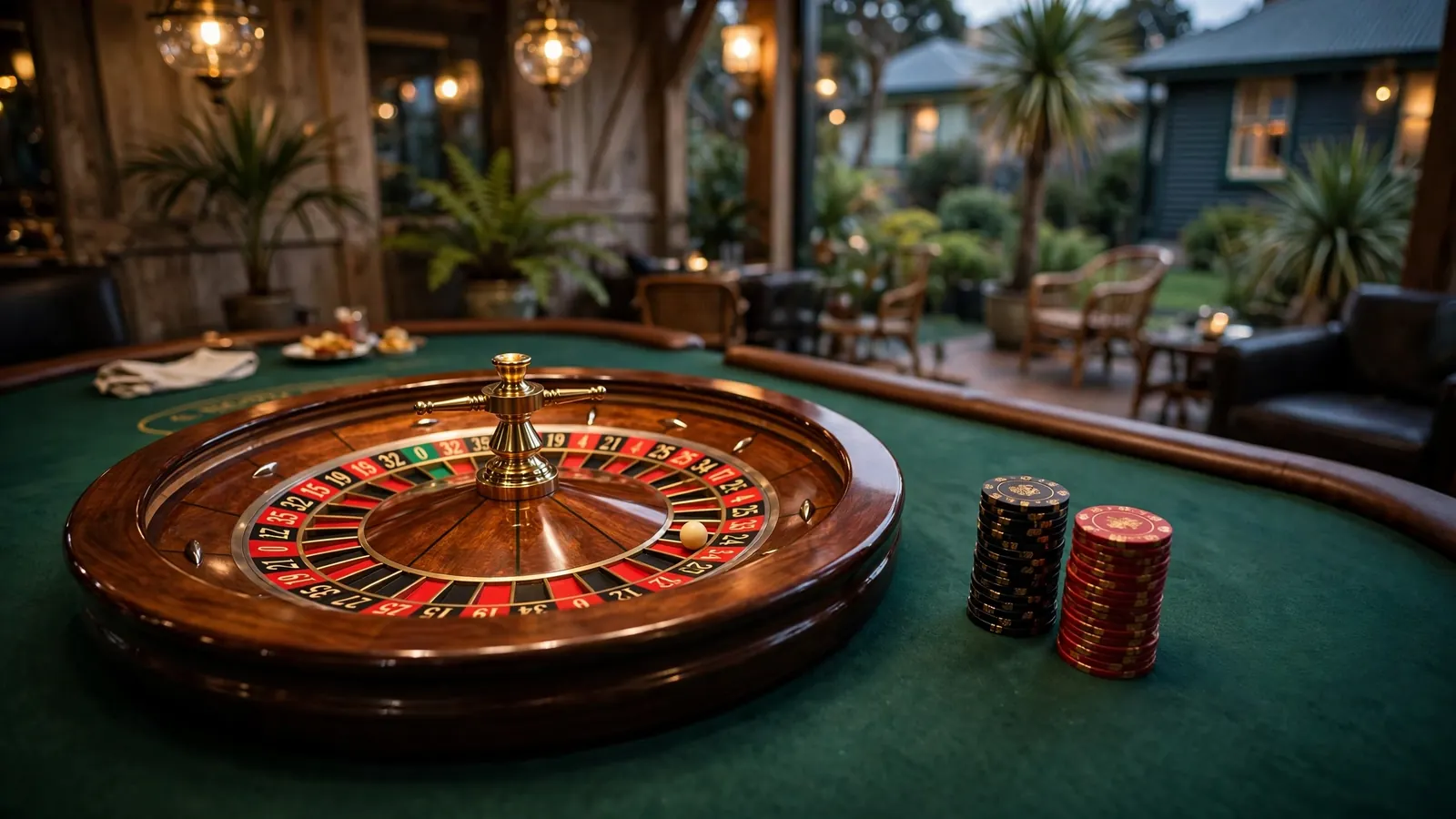
The Wheel You’re Playing Matters
Before you sit down to a roulette game, check which wheel the table uses. The name matters because it tells you something basic about the layout: how many pockets are on the wheel and whether it has a zero or more than one. European and French Roulette share a single-zero layout. Mini Roulette is a much smaller game, with fewer pockets. Those differences are easy to miss when you are looking at a familiar betting table, but they shape the game from the start.
European Roulette has 37 pockets: the numbered pockets from 1 to 36 and one zero. French Roulette uses the same single-zero wheel arrangement. The names distinguish versions of the game, but the wheel itself is not a different size or number pattern in these two cases. French Roulette is associated with additional rules, including La Partage and En Prison. Those rules do not change the number of pockets; they affect how certain bets are treated when zero appears.
That distinction is useful when you are learning the basic roulette rules. A wheel variant describes the game’s physical or digital pocket layout. A rule such as La Partage describes what happens under a particular condition. They are related, but they are not interchangeable: spotting a French label tells you to look for the special rules, while the wheel still has the same single-zero structure as European Roulette.
When you’re learning roulette rules for New Zealand in 2026, it helps to check the available operator details alongside the game rules. Use this list as a reference when considering where to play.
-
7Bit Casino
- License
- Tobique Gaming Commission, licence no. 0000091
You can note that 7Bit Casino lists a Tobique Gaming Commission licence, number 0000091.
-
N1 Casino
- License
- Malta Gaming Authority, licence no. MGA/B2C/394/2017
N1 Casino lists a Malta Gaming Authority licence, number MGA/B2C/394/2017.
-
Ricky Casino
- License
- Tobique Gaming Commission, licence no. 0000002
Ricky Casino lists a Tobique Gaming Commission licence, number 0000002.
-
Lamabet
- Payout speed
- 1-3 business days
The available detail for Lamabet is its stated payout speed of 1–3 business days.
-
BitStarz
- License
- Curaçao Gaming Authority, licence no. OGL/2024/165/0185
BitStarz lists a Curaçao Gaming Authority licence, number OGL/2024/165/0185.
-
Play Grand
- License
- Malta Gaming Authority, licence no. MGA/B2C/370/2017
Play Grand lists a Malta Gaming Authority licence, number MGA/B2C/370/2017.
-
Neospin
- License
- Tobique Gaming Commission, licence no. 0000064
Neospin lists a Tobique Gaming Commission licence, number 0000064.
-
Wintino
- Payout speed
- 1-3 business days
The available detail for Wintino is its stated payout speed of 1–3 business days.
-
Zotabet
- License
- 07017519840
- Payout speed
- 1-3 business days
Zotabet lists the identifier 07017519840 and a payout speed of 1–3 business days.
Mini Roulette is more obviously different. It has 13 pockets, rather than the 37 found on a European wheel, so it is not simply a smaller-looking version of the same layout. The reduced pocket count changes the character of the game, and its house edge is 7.89%. With La Partage, that figure decreases to 3.85%. The rule is a feature to check for, not something to assume from the word “Mini” alone.
The European wheel’s house edge is 2.70%. That figure is tied to its 37-pocket, single-zero structure. You do not need to memorise the calculation before playing, but it is a useful reminder that wheel choice is not just decoration or screen design. Two roulette games can look broadly alike while giving the wheel a different layout, and that changes the underlying terms of play.
At a casino, the game name may appear above the wheel, in the table information, or in the game’s rules panel. I make a habit of checking that label rather than relying on a familiar colour scheme or a layout I recognise. Digital tables can use similar graphics across different versions, so the screen may not make the distinction obvious at a glance. Read the title and the rules attached to that particular table before you begin.

This is especially worthwhile if you move between tables quickly. A European game and a French game can appear nearly identical because they share the same single-zero wheel. The meaningful difference may be in the rules offered alongside that wheel, not in the arrangement of its pockets. Mini Roulette, by contrast, announces a more substantial layout change through its much smaller pocket count. The name is a clue; the game information confirms it.
If you are new to roulette, keep the first check simple: identify the variant, then confirm the wheel layout and any rules that go with it. That is a steadier starting point than assuming every game called roulette follows the same setup. A familiar table is not proof that the underlying game is identical.
You may see other roulette names in a casino catalogue, but the useful first distinction here is between the single-zero European and French layouts and Mini Roulette’s reduced layout. There is no need to learn every label before you can understand what is in front of you. Start with the pockets. Then notice whether the game lists extra rules. The details are there for a reason.
The wheel sets the framework; the table name tells you which framework you are using. Once you have checked those, you can approach the rest of the game without guessing what version is on screen. Small check, big difference.
European Roulette
37 pockets (1-36 and one zero) with a house edge of 2.70%.
French Roulette
Shares the single-zero layout but includes special rules like La Partage and En Prison.
Mini Roulette
A smaller version with 13 pockets and a house edge of 7.89% (reducing to 3.85% with La Partage).
What New Zealand Players Should Know in 2026
For roulette players in New Zealand, the important change in 2026 is not a new way to play. It is the start of a domestic system for regulating online casino providers. The Online Casino Gambling Act 2026 came into force on 1 May 2026, creating New Zealand’s first licensing framework for online casino gambling. That puts the rules for roulette in a different regulatory setting from the one that existed before the Act.
The Department of Internal Affairs (DIA) is New Zealand’s primary gambling regulator and oversees the framework for online casino licensing. The Gambling Commission has a distinct role within that system: it hears and decides casino licence applications, issues online casino licences and approves changes to licence conditions. In short, the DIA oversees the regulatory structure, while the Commission makes licensing decisions. Those roles matter because a licensing regime is more than a label a website can add to its pages.
The transition period
The new framework does not mean every online casino became licensed on the day the Act began. A transition runs from 1 May to 1 December 2026. During that period, only providers that were already offering services to people in New Zealand before 1 May may continue operating, and they must do so under the Act’s transitional provisions. Providers that have not applied for a licence must cease online casino gambling in New Zealand by 1 December 2026.
That is a change in the market, not a reason to assume that every site available to a New Zealand player already holds a local licence. The full licensed system is not expected to be operating until 2027. The legislation sets the direction now; the move to a fully operational regime takes longer. Dry, but important.

The Act also creates a different position for providers that operate without authorisation. Unlicensed operation is expected to become an offence from around mid-2027, and operators without a licence may face enforcement action and fines of up to NZ$5 million. The potential consequences described here concern operators, not players. Playing at an offshore casino without a New Zealand licence does not itself make the customer liable to a fine or criminal prosecution.
What the earlier position meant
Before the 2026 Act, online casino gambling supplied from outside New Zealand was not licensed or supervised by a New Zealand regulator. A player who had a dispute with an offshore website therefore had no domestic government recourse through a local online casino licensing system. That history explains why a familiar website or a roulette table being available online should not be mistaken for proof of New Zealand oversight.
New Zealand law also prohibits online casinos from being based domestically. The Gambling Act 2003 bars online casino operations from being established in New Zealand, while the 2026 Act provides the framework for regulating online casino gambling as the new licensing regime develops. These points are not contradictory: the new regime is about licensing providers in the market, not permission to establish a domestic online casino.
There is also a restriction on promotion during the transition. Online casino gambling must not be advertised to people in New Zealand during this period. So, if you encounter promotional material, do not treat its presence as evidence that the service has local approval. Operators will also face stricter age and identity verification requirements under the licensing framework.
For someone looking at roulette in 2026, the practical takeaway is to distinguish three things: the regulator overseeing the framework, the Commission deciding licence applications, and the transitional status of providers already serving the market. The shift is still under way. A local licensing system is being established, but it is not yet the same as a fully operational regime.
Reading the Roulette Table Without Guessing
The table is a betting map, not a picture of the wheel. Its numbered spaces are arranged for practical reading across the felt; the numbers on the wheel follow a different order. That distinction is easy to miss when you are new to roulette. You see a number on the table, then assume its neighbours there are the numbers a called bet refers to. They are not.
Start by treating each printed number as its own marked position on the layout. The surrounding lines and labels organise those positions into sections, making it easier to identify a selection without scanning the whole surface. The arrangement is tidy enough for placing bets, but it does not reproduce the physical sequence around the wheel.
That is the part worth remembering. Table order is not wheel order.
Two ways numbers can be grouped
A roulette table can group numbers by where their spaces sit on the felt. A called bet, by contrast, groups numbers according to where they sit in relation to one another on the wheel. The same number may therefore belong to one table grouping and a different wheel grouping.

When someone calls a bet, listen for the name of the selection rather than trying to infer it from the nearest printed spaces. The call refers to a group defined by wheel positions. It is not simply shorthand for a row or a patch of felt. If you are unsure what a call covers, ask to see the selected numbers before committing. That is much simpler than trying to reconstruct the wheel order from a table.
This also explains why the felt can be useful without telling you everything. It shows where a chip can be placed and how the table labels its areas. It does not, by itself, show which numbers sit beside one another around the wheel. For that, you need the wheel-based grouping or a clear explanation of the called bet.
Read the labels, then check the selection
A quick glance across the layout can tell you whether you are looking at a single numbered space or a labelled group. Take a moment to check which marking you are using. A chip placed on a number is different from one placed on a line or a labelled area; the position communicates what you intend to select.
With a called bet, the name is doing more work than the shape of the table. The table may have a compact label or a designated area for the call, but the numbers included are determined by their positions on the wheel. Do not assume that a neat cluster on the felt must correspond to a wheel-neighbour group.
Do
- Treat each printed number as its own position on the layout
- Listen for the name of the selection during called bets
- Confirm covered numbers via the interface or dealer
Don't
- Assume table order is the same as wheel order
- Infer a called bet from the nearest printed spaces on the felt
- Assume a neat cluster on the felt corresponds to wheel-neighbors
I find it helps to separate the task into two questions: “Where is this selection shown on the table?” and “Which numbers does the call include?” The first is about reading the layout. The second is about understanding the wheel-based grouping. They are related, but they are not the same question.
If you are playing at a live table, the dealer can clarify a called selection before the spin. Online, look for the game’s table guide or the information attached to the bet. A clear interface should make the selection visible; if the highlighted numbers do not make sense, pause rather than relying on the label alone.
A small check before the spin
Before placing a chip, match the selection you intend to make with the area or numbers shown on the felt. For a called bet, confirm the covered numbers from the displayed selection, not from nearby spaces on the layout. This simple check avoids a common mix-up: reading the table as though it were laid out in wheel order.
Once you keep those two arrangements separate, the table is less mysterious. The felt organises bets for the player; the wheel determines which numbers belong together in a called bet. Different jobs.
Roulette Odds and Payout Percentages, Clearly
A payout percentage is a way to describe the share of stakes a roulette game is expected to return over a very large number of spins. It is not a forecast for your session, and it does not mean that a particular stake will come back in that proportion. Individual results can be far above or below the long-run figure.

A specialist review reports a payout percentage of 97.30% for European roulette and 94.70% for American roulette. Treat these as reported figures, rather than universal promises for every game bearing those names. The same review gives European roulette a 2.70% house edge. Those European figures complement each other: the stated return leaves the corresponding share with the house over time.
For American roulette, the stated figures do not match as neatly. The established house-edge figure for that wheel is 5.26%, while the specialist review reports a 94.70% payout percentage. Those two values do not add to exactly 100%. It is better to keep the distinction visible than to pretend they are a perfectly matched pair. A published payout percentage and a house-edge figure may come from different presentations or calculations, so check what a particular game states rather than treating one number as a guarantee.
What the percentage can—and cannot—tell you
The house edge describes the casino’s mathematical advantage over time. The payout percentage expresses the corresponding idea from the player’s side: a higher stated return means a smaller theoretical share retained by the house, all else being equal. Neither figure tells you when a win will arrive, how long a losing run might last, or what your balance will be after a set of spins.
That distinction matters when comparing games. A theoretical return is useful for understanding the broad cost of play, but it is not a personal return rate. You might lose your stake on a single spin, or win; the percentage does not soften either outcome. I find it easiest to read these figures as background information, not as a reason to increase a bet.
For 100/1 roulette, a specialist review reports payout percentages ranging from 92.86% to 96.19%. The range is worth noticing: it does not give one fixed return figure for every version. It also should not be converted into a precise house edge without knowing the specific game and calculation behind its stated return. A label alone is not enough to establish what applies to the table in front of you.
When you compare figures, keep the game name, the stated payout percentage and the house edge together. Do not assume that two different descriptions use perfectly aligned calculations, particularly where the reported values do not complement each other. The practical point is modest: these numbers describe long-run mathematical expectations, not a likely result for your next spin. The wheel still decides each one.
What Double-Zero Roulette Changes
American Roulette adds a double-zero pocket to the wheel. It has 38 pockets in total: one marked zero, one marked double zero, and the numbered pockets. That extra result is the key difference to keep in mind when you sit down to play. The game still has a zero, but now there are two green pockets that can affect a spin.
The practical consequence is reflected in the house edge: American Roulette has a 5.26% house edge. The double zero gives the house another pocket on the wheel, so the rules do not work out as favourably for the player as they do on a single-zero wheel. It is easy to overlook that when the betting layout looks familiar. The wheel is what changes the calculation.

When you are checking the rules at a table, make sure you can tell the single-zero and double-zero pockets apart. A double-zero game is not simply a European-style wheel with a different label; the extra pocket is part of the game’s outcome set. If you move between tables or switch versions online, check the wheel and the rules displayed for that game before placing a bet. Small detail. Material difference.
There is one qualification worth knowing about certain even-money bets. A specialist review reports that some American Roulette tables in Atlantic City return half the stake when zero or double zero lands. That treatment is not a standard feature of American Roulette, and the report should not be taken as proof that a particular table offers it now. Do not assume that a half-stake return applies just because the game is American Roulette, or because you have seen it described for an Atlantic City table.
For a New Zealand player, the useful habit is straightforward: read the specific table rules rather than carrying assumptions over from another version. If the rules do not state that a half-stake return applies on zero or double zero, do not build your understanding of the game around expecting one. The American wheel’s defining feature remains its pair of zero pockets, and its stated house edge reflects that version of the game.
So, when comparing the basic rules, pay attention to the wheel itself and to any clearly stated exception for zero outcomes. The second green pocket is not decoration; it changes the odds attached to the game. A special return rule may change how an eligible bet is settled at a particular table, but it does not turn that rule into a universal part of double-zero roulette. That distinction is worth checking before the first spin.
Where Your Bets Go on the Layout
A roulette layout gives you two broad places to put a chip: on the numbered grid in the centre, or in the marked areas around it. These are commonly called inside and outside bets. The names describe where you place the chip, not how likely a result is or what it pays.
Inside bets sit on or between the individual number squares. Placing a chip directly on a square selects that number. If you place it on a boundary between squares, you select the numbers touched by that boundary; a corner position can cover the squares meeting there. The exact betting positions are printed on the layout, so check where the chip lands before confirming the wager. On a live table, the dealer can clarify a placement; online, the bet is registered according to the spot you click or tap.
Outside bets go in the labelled bands around the grid. These cover broader categories rather than particular squares: for instance, a colour, odd or even numbers, or a range shown on the felt. The labels make the choice visible, but do not assume that a chip placed close to a label has registered on it. Look for the table’s selection highlight or confirm the bet display before the spin starts.

I find it helps to think in two steps: first choose the category or number, then check the chip’s position. That avoids a familiar nuisance—intending one kind of bet and placing another because the cursor slipped or the live-table marker straddled a line. A chip can be moved or removed while betting is open, subject to the table’s controls. Once betting closes, the layout is no longer a place to revise your choice.
The broad inside-and-outside distinction matters when a wheel has a zero. La Partage and En Prison are not general protections for every chip on the table. They apply only to eligible even-money outside bets, and only when zero lands. An inside selection does not qualify simply because it happens to be near an outside label. Nor does every outside bet qualify: the relevant category must be an even-money bet under the table’s rules.
That is the practical check to make before play: identify the area where your chip is going, then note whether the outside category is eligible for a zero rule. If the table offers La Partage or En Prison, those rules affect the handling of an eligible even-money outside bet after zero; they do not change where you place it. The felt may look busy, but the placement question is simple once you separate the numbered grid from the surrounding categories.
Keep the chip on the intended mark. Check before betting closes.
French Roulette’s Zero Rules in Practice
Zero is the moment when two French roulette rules can change what happens to an eligible even-money outside bet. They do not apply to every wager on the table: the bet must be an even-money outside bet, and zero must land. The rule offered at the table matters, so check its wording before placing your stake.
Eligible Bets for Zero Rules
La Partage and En Prison only apply to eligible even-money outside bets when zero lands; they do not protect inside bets or other types of wagers.
With La Partage, half your stake is returned when zero appears. The other half is collected, so the bet is not treated as a full win or a full loss. This rule is exclusive to French roulette. If you have only played tables where zero takes the whole stake, the split can be easy to miss. A small detail, with a real effect.
En Prison handles the same eligible bet differently. When zero lands, the bet is carried forward rather than settled immediately. If your selection wins on the next spin, you get the original stake back, but no additional winnings. If it loses, the stake is collected. The carried bet is still at risk; it has not been returned just because the first spin ended on zero.
That next-spin condition is worth reading carefully. A winning result returns your stake only; it does not turn the original wager into a payout. A losing result means you lose it. If the table’s wording is unclear, ask before you play rather than guessing how the carried bet will be resolved.
In practice, I keep the distinction simple: La Partage gives half back straight away, while En Prison leaves the stake in play for the next spin. Both rules concern eligible even-money outside bets after zero, not other types of wager. They also do not make a bet certain to win. Roulette outcomes remain random, and every real-money bet can lose, so do not risk more than you can afford to lose.
Before betting, look for the rule named on the table and confirm that it applies to your wager. A familiar label is not a substitute for checking the condition.
Minimum Bets: Check the Table Before You Play
Before placing a chip, find the minimum bet shown for that specific roulette table. There is no single minimum that you can assume applies to every roulette game, and a general description of roulette rules cannot tell you the limit at a particular table. The displayed table information is the practical point of reference.
Check it before choosing a stake, not after you have built a plan around one. If the minimum is higher than you are comfortable risking, move on rather than stretching your budget to join that game. If the limit is unclear, pause and look for the table’s information panel or ask the operator’s support team to clarify it. Guessing is a poor way to start.
Also check what the displayed figure refers to. A table may show a minimum for a bet, and the game interface may make it easy to place several bets at once. Make sure the total amount you are staking is one you can afford to lose; the number beside a single betting area is not a reason to ignore the rest of your layout.
For live and online roulette, take a moment to read the table details before the first spin. The game name alone does not answer what stake it will accept. Nor should you assume that a limit you saw at another table carries over to this one. Check the specific game you have open.
- Locate the minimum bet shown for the specific table
- Compare the minimum bet against your personal spending limit
- Verify if the limit applies to a single bet or the total stake
- Confirm the limit with support if the information is unclear
I make this check before deciding how much to play, because it keeps the table’s terms separate from my own budget. Set your spending limit first, then play only if the table’s stated minimum fits within it. If it does not, leave that table; there is no need to chase a different stake by risking more than you can afford to lose. A quick check beats an awkward reset.
How Roulette Payout Rules Affect the House Edge
A roulette table’s house edge is not just a feature of its wheel; the rules attached to eligible bets matter too. In French Roulette, La Partage or En Prison reduces the house edge to 1.35% when the rule applies to even-money bets. That makes French Roulette the strongest choice for those bets compared with versions that do not offer the same protection.
The benefit is specific, not universal. It applies to even-money outside bets, not every wager on the table. So when I compare tables, I look for the rule and check which bets it covers rather than assuming the French label improves every possible bet.
La Partage can also reduce the effective house edge on an eligible even-money bet when zero lands. En Prison has the same stated French Roulette house-edge figure when the rule applies. The important point is the effect over repeated play: these rules soften the casino’s advantage for the covered bets. They do not change the outcome of a particular spin or make a win predictable.
That distinction is easy to miss if you focus only on the headline payout. A familiar payout can look identical from one table to another while the zero rule changes the long-term cost of making an eligible bet. Read the table’s rules before staking money; the variant name alone is not enough.

For those covered bets, French Roulette offers the best odds because La Partage and En Prison reduce the house edge. If you are choosing between tables, that is a meaningful difference. It is not a promise of profit, though, and a favourable edge does not stop a losing session. Roulette results remain random, and every real-money bet can lose. Keep your stake within what you can afford to lose.
A Roulette Strategy That Starts With the Odds
A sensible roulette strategy starts with what a spin can and cannot tell you. Each spin is independent: the result before it does not change the probability of any outcome on the next spin. A run of red does not make black “due”, and a number appearing recently is no less or more likely to appear again because of that history.
I used to watch the results display as if it were offering a clue. It wasn’t. It records what happened, not what the wheel is about to do. Treating a streak as a forecast can lead you to raise a stake for no mathematical reason.
The useful choice is not a pattern-finding system but understanding the rules attached to your bet. French Roulette offers the best odds for even-money bets because La Partage and En Prison can soften the effect of zero on eligible bets. That advantage applies to those bets under those rules; it does not turn a spin into a predictable event or make every type of wager equally favourable.
A betting system cannot remove the house edge. Changing stake size, switching colours after a loss, or following a sequence may change how your balance moves from spin to spin, but it does not alter the underlying probabilities. No system can make a real-money bet safe.
Keep your plan plain: decide what you can afford to lose before play, choose bets whose rules you understand, and stop when you reach your limit. Don’t chase a loss by assuming the next result will correct the last one. It may not.
Random means random.
Casino Games in New Zealand: Roulette, Cards & More
Content created by the «casinoslotsinfonz.com» team