
Make Sense of Your Keno Result
 Available in US
Each draw selects 20 numbers from a pool of 80; results are checked against your chosen line and are distinct from overseas draws.
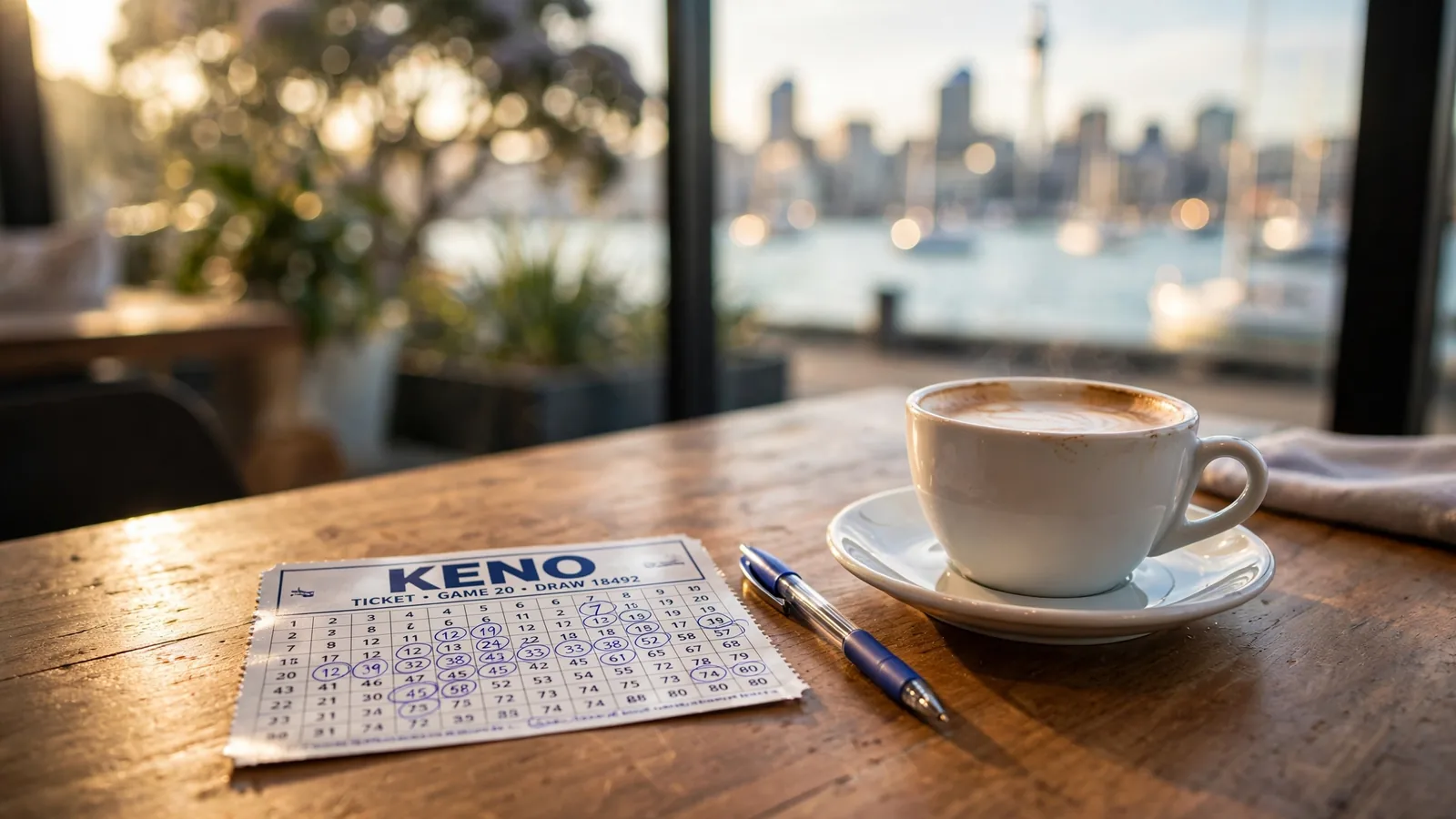
How Keno Draws Work in New Zealand
New Zealand Keno starts with a pool of 80 numbers. For each draw, 20 are selected from that pool. Your ticket has its own number line: you choose between one and ten numbers, or use Quick Pick to have a selection made for you. The numbers on your line are not the numbers drawn; the result is the separate set of 20.
That distinction makes a result easier to read. You compare the numbers drawn with the numbers on your ticket and see how many match your selection. Choosing more numbers does not mean you are choosing more of the draw. You are still selecting a line from the same pool, while the draw still produces 20 numbers.
You can pick your numbers yourself or leave the choice to Quick Pick. I’d keep the two ideas separate: Quick Pick chooses your line, not the winning numbers. It is simply another way to make a selection, with no special influence over the draw.
If you play more than one line, check each one against the result separately. A Favourite can help you return to a selection you like, but it does not make that line more likely to appear. The same goes for numbers you have chosen yourself. Personal meaning is fine; predictive power is another matter.
When you look at Keno draw results, the basic question is whether your selected numbers appear among the 20 drawn. The number of spots on your line matters to the game’s prize rules, but the draw itself remains the same kind of event: 20 numbers selected from 80. Keep that simple frame in mind before trying to make the result mean more than it does.
 Lightning Roulette in New Zealand: Odds and RulesLearn how wheel formats, bets and multiplier conditions affect Lightning Roulette. European Roulette has a 2.70% house edge; American Roulette, 5.26%.
 Blackjack Strategies for New Zealand PlayersLearn how table rules shape blackjack decisions, from soft hands to drawing; an ace can count as one or eleven.
So, whether you choose one number or ten, or let Quick Pick decide, you are entering with a line drawn from the same range. The result records the numbers selected in the draw; it does not change your original selection. A small distinction, but an important one.
Finding Today’s New Zealand Keno Results
When someone asks for today’s New Zealand Keno results, they may mean the numbers from a draw that has already taken place, or they may be looking for the day’s full set of results. The distinction matters because Keno has four scheduled drawings in New Zealand: 10 am, 1 pm, 3 pm and 6 pm. “Today” covers that whole daily schedule, not one separate draw.
I find it easiest to think of the results by their draw time. A result belongs to a particular drawing, and the day’s four results are separate records. So if you are looking for the latest result, first consider which of the scheduled times you mean. The latest drawing in the day’s schedule is not the same thing as a complete record of the day.
The four daily draw times
| Scheduled draw | How to place it in the day |
|---|---|
| 10 am | The first scheduled drawing |
| 1 pm | The second scheduled drawing |
| 3 pm | The third scheduled drawing |
| 6 pm | The last scheduled drawing |
These are the times to keep in mind when you look for Keno results in New Zealand. There are four drawings each day, rather than a single draw that produces one result for the entire day. That simple point clears up a lot of confusion around “today’s numbers”: the phrase can refer to one of the day’s drawings, or to the set of results associated with all four.
The schedule also helps make sense of phrases such as “tonight’s result.” In the New Zealand timetable, 6 pm is the final scheduled draw of the day. A result described as tonight’s may therefore refer to that drawing, while “today’s results” can cover more than one draw. The wording is casual; the draw time is the useful detail.
If you are checking results later, it helps to anchor your search to the date as well as the draw time. A reference to yesterday’s Keno results is about the drawings on the previous day, not a different version of Keno. Likewise, “latest results” is a moving description: it points to the most recent drawing someone has in mind, while the schedule itself stays organised around the same four daily times.
This is why “latest” and “today” do not always mean the same thing. The latest result may be from one of today’s scheduled draws, but the day is not represented by one result alone. If you want the full picture for a date, keep the four times together in your mind. If you have a particular drawing in mind, use its time to distinguish it from the others.
Making sense of the day as a whole
For a quick mental map, the schedule runs from 10 am through 1 pm and 3 pm to 6 pm. The first two drawings are three hours apart; the next pair is two hours apart; the final pair is three hours apart. That spacing explains why a “today” page or listing can contain several entries rather than one daily line. The day has a clear rhythm, but the gaps are not identical.
Some descriptions of Keno schedules say drawings happen roughly every three hours. That is only an approximation: the New Zealand timetable includes a two-hour gap between the 1 pm and 3 pm draws. The exact listed times are more useful than a rounded description, especially if you are trying to identify which drawing a result belongs to. One small wrinkle, but worth knowing.
The New Zealand times are commonly written as 10 am, 1 pm, 3 pm and 6 pm. Those clock times are the practical reference for the daily schedule. A date-based label tells you which day’s results you are considering; a draw-time label tells you which of that day’s drawings you mean. Put those two pieces together and “Keno results today” becomes much less vague.
 Roulette for New Zealanders: Compare Wheel OddsCompare European and American roulette by pocket count and house edge, and see why betting systems and number patterns cannot change the…
 Baccarat Strategy for New Zealanders: Systems and PlayLearn how card counting, decision plans and progressions differ. The Martingale changes later bet sizes after results, not the decisions themselves.
It is also useful to separate a schedule from a result. The schedule tells you when the four drawings are set to take place. A result is attached to one particular drawing. If you are scanning a list, the date and draw time are the details that stop one entry being mistaken for another. You do not need to treat the day as a single event.
So, for New Zealand Keno, use the day and the scheduled time as your reference points: 10 am, 1 pm, 3 pm or 6 pm. That keeps a search for today’s results grounded in the local timetable, whether you mean one drawing or the day’s results as a whole.
When a Live Keno Result Is Actually Available
“Live” can make it sound as though a Keno draw is happening continuously, or that a result appears the moment you look for it. It does not change the timetable. In New Zealand, drawings are scheduled for 10 am, 1 pm, 3 pm and 6 pm local time. A result described as live can only relate to a drawing that has taken place; the word itself does not bring a draw forward or make one happen between scheduled times.
The practical timing question is often about your ticket, not the result. A single play goes into the next drawing whose sales cutoff it meets. If you buy after that cutoff, it is assigned to the drawing after that one. So a ticket purchased close to a draw may not be in the draw you had in mind. The cutoff is the dividing line; the clock time of the drawing alone does not tell you whether a particular ticket made it in.
I would check the drawing attached to the ticket rather than assume that “today” means the next result on the schedule. If you buy after one drawing has closed, your play does not slip into it just because the draw is still on your mind. It moves to the following eligible drawing. That is the small detail that can trip you up when you are trying to match a purchase with a result.
What “today” and “tonight” mean
People looking for a result today may mean different things: the latest drawing that has already happened, a later drawing still due, or the drawing their ticket is entered in. Those are not interchangeable. If a drawing has not taken place yet, its result is not available as a completed result. And if your ticket is entered in a later drawing, an earlier result from the same day is not the one that determines its outcome.
“Tonight” is just a way of referring to a later scheduled drawing, not a separate Keno session outside the daily timetable. The evening drawing is at 6 pm in New Zealand. If that draw has not happened, there is no completed result for it yet. If it has happened, a later search may refer to that drawing, but the result’s timing still depends on the draw itself.
The same distinction matters if you are checking a ticket bought earlier in the day. A ticket is not assigned according to when you happen to check it, and checking during a live period cannot change its entry. Its place in the schedule was set by whether the purchase was completed before the relevant cutoff. That is why “I bought it today” is not enough to identify which drawing it belongs to.
A missed cutoff changes the drawing
Suppose you intend to enter a particular scheduled drawing but complete the purchase after its sales cutoff. That play goes into the next drawing instead. It is not a late entry to the one that has already closed. The exact cutoff is the important point for your purchase, so do not rely on the scheduled draw time as a substitute for it.
This also explains why two people buying on the same day may be waiting for different results. One may have completed a play before a cutoff and entered the nearer drawing; another may have missed it and be entered in the following one. “Today’s Keno” can therefore refer to more than one drawing, depending on when the ticket was accepted.
A search for results from yesterday is different again: it refers to a past day’s drawings, not to a ticket entering a future draw. Keep the date and the drawing linked to your play in mind. The date alone may not settle which result applies when several drawings take place during the day.
I treat the schedule and the sales cutoff as two separate pieces of information: the schedule tells me when drawings are set to happen, while the cutoff determines which one a single play enters. If you are unsure which drawing your ticket was placed in, check its entry details rather than guessing from the time you bought it. A “live” label cannot answer that for you.
Do
- Check the drawing attached to your ticket
- Verify the sales cutoff time
- Use the date and draw time as references
Don't
- Assume "today" means the next result
- Rely on the draw time alone for entry
- Guess your drawing based on purchase time
Daily Keno Results: Four Draws, One Day
New Zealand Keno runs on a four-draw daily schedule: 10:00 am, 1:00 pm, 3:00 pm and 6:00 pm. If you are keeping track of daily results, those are the four points in the day to keep in mind. It is one game with several scheduled draws, not a separate Keno format for each time.
The spacing is not quite even. There are three hours between the morning draw and the early-afternoon one, two hours between the 1:00 pm and 3:00 pm draws, then three hours until the evening draw. That uneven middle gap is easy to miss if you have heard the schedule described as draws happening approximately every three hours.
There is a genuine difference between that broad description and the precise timetable. “About every three hours” gives a rough impression, but it does not describe every interval accurately: the middle pair is only two hours apart. For planning around daily results, the listed times are clearer than the approximation. Small distinction, useful one.
The day at a glance
| Draw | Time |
|---|---|
| Morning | 10:00 am |
| Early afternoon | 1:00 pm |
| Afternoon | 3:00 pm |
| Evening | 6:00 pm |
The labels here are just a way to make the timetable easy to scan; they do not indicate different rules or kinds of draw. Each time marks one of the four scheduled drawings. When people talk about today’s Keno result, they may mean the result from any one of these draws, so the time matters when you are discussing a particular result.
I find it helps to think of the day in two parts: a three-hour gap, then a shorter two-hour interval, followed by another three-hour gap. That is more accurate than picturing a draw arriving at perfectly regular intervals. If you are checking a result later in the day, naming its scheduled time avoids mixing it up with another result from the same date.
The 6:00 pm draw is the final one on the daily timetable stated here. The fact that there are multiple draws in a day does not mean the intervals are identical, and it does not make the drawings one continuous event. Each has its own place in the schedule. Keep the time attached to the result, especially if you are comparing notes about what was drawn earlier and later that day.
A quick way to remember the sequence is 10, 1, 3, 6. The first and last gaps are three hours; the middle one is two. You do not need to calculate anything when checking the timetable, but that pattern helps explain why the general “roughly every three hours” description can sound right while still being imprecise.
So, when someone mentions daily Keno results, the useful first detail is which scheduled draw they mean. The four times spread across the day, but not at equal intervals. That is the whole schedule in a nutshell.

What “Live Keno Results” Can Tell You
A live result is a record of what happened in a particular Keno drawing. It can tell you which numbers were drawn; it cannot tell you what the next set will be. That distinction sounds obvious until you have watched a run of results and started looking for a story in them. I have done it. The story is usually just chance wearing a pattern-shaped hat.
When you look at Keno results today, live or after the event, treat each result as information about that drawing alone. A number appearing several times in recent results is not thereby more likely to appear next. A number that has not appeared for a while is not waiting its turn. The drawings are independent, so earlier outcomes do not push a later one in either direction.
That is what live Keno results are good for: confirming the recorded outcome of a draw, not forecasting another. The latest Keno results may be useful when you want to compare an outcome with a play you already made. They do not become a forecast just because they are recent or displayed as they happen.
The pattern trap
Our brains are good at noticing repetition. If a number appears in several results close together, it can feel as though it is “hot”. If another number has been absent, “due” can seem like a reasonable description. Those labels are ways people talk about past results, not properties that make a number more likely in a future independent draw. “Cold” works the same way: it describes what someone has noticed, not what comes next.
A chart can make these labels look more convincing by arranging past outcomes neatly. It still only shows the past. The same goes for a number generator, a tracking app, or a personal system: each may organise choices or information, but none can predict an independent drawing or improve the odds. A tidy display is not an edge.

This matters whether you are looking at a single result or a long record. A sequence can look unusual without giving you a reliable clue about the next outcome. And if a number has appeared often in a chart, that does not mean it is “due” to stop; if it has been absent, that does not mean it is “due” to arrive. Neither conclusion follows from the earlier results.
What a result does not say
A Keno game result does not explain why those numbers appeared, or offer a message about what to choose next. It cannot confirm that a particular selection is on a winning streak, either. Each drawing stands on its own. Past results do not alter the odds of a later one.
So, if you are reviewing a run of results, keep the question narrow: what was recorded in those drawings? Once the question becomes “what must happen next?”, the results are being asked to do something they cannot do. I find it helps to separate looking back from deciding what to play. They are different tasks.
The same applies when you check results tonight. A fresh outcome may feel more meaningful because it is the newest one, but new does not mean predictive. It is still a record of one drawing, not a hint about the next.
If you choose to play, decide in advance what you are comfortable spending and treat Keno as entertainment, not a way to make money. No chart or sequence can turn chance into a plan. That is the useful limit of live information: it can show what happened, and no more.
Reading a Keno Result and Claiming a Prize
Once a drawing is over, the result is useful only when you compare it with the numbers on your own ticket. Check the correct play and drawing, then match your selected numbers against the numbers drawn. If you have more than one play on a ticket, take them one at a time; it is easy to glance at a result and assume it applies to every line.
A result is a record of what was drawn, not proof that a particular ticket has won. The ticket is the important part of the check. Keep it intact while you work out whether your numbers match, and avoid relying on memory or a note you made when buying it. A small mix-up between plays can lead you to the wrong conclusion.
If a match appears to make your ticket a winner, confirm the outcome through Lotto NZ’s own information or ask the operator what to do next. A result copied elsewhere may be useful for a quick comparison, but it should not be treated as the final word on payment. I would keep the ticket until the outcome has been confirmed. No need to rush a guess.
The date of the drawing matters after a win, too. A Keno prize has to be claimed within twelve months of the draw it belongs to. That period runs from the drawing date, not from the day you happen to notice the result. If the claim is not made before the deadline, the prize is forfeited and the money is transferred to the Prize Reserve Fund.

That makes keeping track of a ticket worthwhile, especially if you bought it for a drawing you did not check straight away. Put it somewhere you can find it, and note which drawing it relates to. Do not leave a possible win sitting in a wallet or drawer and assume there will always be time to sort it out later. The deadline is firm.
If you discover an old ticket, first identify its draw date and compare it with the claim period. A previous result can help you identify the drawing, but it cannot extend the time allowed to claim. If you are unsure whether the ticket relates to a particular result, ask Lotto NZ rather than making a decision from an incomplete comparison.
A win can be exciting, but it does not change what a later draw will do. Treat each ticket as a separate result to check, and set a firm spending limit before playing. Keno is entertainment, not a way to make money. Keep the check simple: match the ticket, confirm the result, and act within the claim period.
New Zealand Keno Results and Overseas Results Are Different
A result labelled for New Zealand refers to the local Keno game run by Lotto New Zealand. Its tickets are sold through Lotto NZ retailers and online through MyLotto, and you must be physically in New Zealand to buy one. A result from another country belongs to that country’s game; it is not an alternative record of the New Zealand draw.
That matters when a page puts New Zealand and Belgian results side by side. “Keno” is the shared game name, not proof that the draws, tickets or prize arrangements are connected. If you are checking a New Zealand ticket, use the New Zealand result for the relevant draw. Belgian results won’t tell you whether that ticket has won. Different game, different record.
There is also a distinction between Lotto NZ’s Keno and Keno-style games offered by overseas online casinos. Those are separate products, even if their names and number-drawing format look familiar. A casino page displaying foreign results is not the official record for a Lotto NZ ticket.
Who oversees gambling in New Zealand?
The Department of Internal Affairs is New Zealand’s main gambling regulator. The legal position for online casinos has been changing: the Online Casino Gambling Act 2026 took effect on 1 May 2026, creating the country’s first domestic licensing framework for online casino gambling. The Gambling Act 2003 had not allowed online casinos to be based in New Zealand.

The new Act includes a transition from 1 May to 1 December 2026. Providers that were already serving New Zealand customers before the Act began may continue during that period under its transitional rules. The full licensing system is not expected to be operating until 2027. During the transition, the Department of Internal Affairs oversees the online casino licensing framework, while the Gambling Commission handles casino licence applications, decisions on those applications, and changes to licence conditions.
That framework concerns online casino gambling; it does not turn overseas Keno results into New Zealand Keno results. The source of the ticket still matters. For local Keno, stick to Lotto NZ’s own channels or a Lotto NZ retailer when matching a result to a ticket. Third-party pages may republish information, but they are not the operator of the local game.
If a result page names another country, take the label literally. It may be useful to someone checking a ticket for that market, but it cannot verify a New Zealand ticket. A familiar title is not the same draw.

How to Check a Result Without Chasing Patterns
When you check a Keno result, treat it as a record of one completed draw. Compare the drawn numbers with the numbers on your ticket, and keep the two lists separate: the draw produces the result; your ticket shows the numbers you selected. A saved Favourite or Quick Pick can make it easier to recognise your own line, but it does not change what the result means.
Charts and number generators can be useful for organising information or choosing a line. They cannot show which numbers will appear next. A chart may make a run of repeated numbers look significant, while a generator may give a set of numbers an air of precision. Neither can predict an independent draw.
That point matters when a number feels “hot” because it has appeared often, or “due” because it has not shown up recently. Previous results do not make a number more or less likely in the next drawing. Each draw stands on its own. Patterns belong to the record you are looking at, not to a forecast.
- Match your ticket numbers against the official drawn numbers
- Confirm the specific draw date and time
- Use official sources like MyLotto for verification
- Set a firm spending limit before playing
I find it helps to decide what you want a tool to do before using it. If you want to keep past results in order, a chart can help. If you want a randomly selected line, Quick Pick does that. If you want a reliable way to call the next result, neither offers one.
For a straightforward check, use the result for the relevant draw and compare it with the ticket you actually bought. Do not let a third-party chart or a generated line replace the ticket as your reference. Republished results carry no guarantee and are not what a retailer will pay against.
Keep the limits of the exercise clear, too. Keno is a game of chance; no app, chart or system improves the odds. Set a firm spending limit before playing, and treat the game as entertainment rather than a way to make money. Dry, but useful.
Keno Results for New Zealand Players in 2026
If you’re checking keno results in New Zealand in 2026, it helps to review the operators listed here alongside the information available about them. Use the details as a starting point when deciding what to look into further.
-
7Bit Casino
- License
- Tobique Gaming Commission, licence no. 0000091
7Bit Casino is listed with a Tobique Gaming Commission licence, number 0000091.
-
N1 Casino
- License
- Malta Gaming Authority, licence no. MGA/B2C/394/2017
N1 Casino is listed with a Malta Gaming Authority licence, number MGA/B2C/394/2017.
-
Ricky Casino
- License
- Tobique Gaming Commission, licence no. 0000002
Ricky Casino is listed with a Tobique Gaming Commission licence, number 0000002.
-
Lamabet
- Payout speed
- 1-3 business days
Lamabet’s stated payout speed is 1–3 business days.
-
BitStarz
- License
- Curaçao Gaming Authority, licence no. OGL/2024/165/0185
BitStarz is listed with a Curaçao Gaming Authority licence, number OGL/2024/165/0185.
-
Play Grand
- License
- Malta Gaming Authority, licence no. MGA/B2C/370/2017
Play Grand is listed with a Malta Gaming Authority licence, number MGA/B2C/370/2017.
-
Neospin
- License
- Tobique Gaming Commission, licence no. 0000064
Neospin is listed with a Tobique Gaming Commission licence, number 0000064.
-
Wintino
- Payout speed
- 1-3 business days
Wintino’s stated payout speed is 1–3 business days.
-
Zotabet
- License
- 07017519840
- Payout speed
- 1-3 business days
Zotabet is listed with the identifier 07017519840, and its stated payout speed is 1–3 business days.
For a New Zealand player checking a Keno result today, the practical starting point is eligibility: you must be at least 18 to buy a lottery product, and the same age rule applies if you are claiming a prize. A result can matter only if you are entitled to hold the ticket and claim against it. Keep the ticket details available while you check; a number match on a screen is not, by itself, confirmation of payment.
Tax is a separate question from whether a ticket has won. A specialist review describes New Zealand lottery prizes as tax-free, while noting that an overseas resident may have tax obligations under the rules of their own country. That distinction matters if you live abroad: the New Zealand treatment does not settle your tax position elsewhere.
The same specialist review says the prize itself is not taxed in New Zealand, but interest earned after the prize is paid may be. In other words, receiving a lottery prize and earning income from keeping or investing it are not necessarily treated alike. If the outcome would affect your tax planning, check current guidance with a qualified adviser rather than relying on a general description of lottery tax.
I would keep the two checks separate: first establish whether the ticket qualifies for a prize, then consider what tax rules apply to you and any income the money later generates. This is especially useful when a result is being checked on behalf of someone who lives overseas. Their age must meet the local threshold for buying or claiming, and their country’s tax rules may also come into play. No guesswork needed.
Can You Check Keno Results Online?
Yes. For New Zealand Keno, start with Lotto NZ’s official online service, MyLotto. It is the local route for playing online and the place to look for the operator’s own information. You can also use Lotto NZ’s website to reach its official game information. If a page is not clearly run by Lotto NZ, treat it as a separate source rather than an official record.
That distinction matters when results are copied elsewhere. A third-party page may republish numbers, but republished information is not guaranteed and should not be treated as the result a retailer will pay against. For anything that affects a ticket or a prize, confirm it through Lotto NZ or MyLotto and keep the ticket for checking.
Some websites also offer to buy New Zealand lottery tickets for people overseas. A specialist review describes concierge and messenger services of this kind as independent businesses, with no connection to Lotto NZ. A service displaying New Zealand Keno numbers is not thereby an official Lotto NZ outlet, and a service offering to obtain a ticket is not the same as buying through MyLotto.
There is a local practical limit, too: you must be physically present in New Zealand to buy a ticket. Lotto NZ sells tickets through its retailers and online through MyLotto; that does not make an overseas ticket-purchasing service part of its official channel.
I’d keep it simple: use Lotto NZ or MyLotto for the official online route, and treat other sites as republishers unless they clearly establish otherwise. Third-party pages can be useful for viewing information, but they do not replace the operator’s own record.
How does Keno work in New Zealand?
You choose between one and ten numbers from 1 to 80, or use Quick Pick. Each draw selects 20 numbers, and your result depends on how many match your selection.
What time are the Keno draws in New Zealand?
Draws are scheduled daily at 10 am, 1 pm, 3 pm and 6 pm New Zealand time.
Can this generator improve my odds?
No. A generator or Quick Pick selects your numbers but does not influence the draw or give your line a better chance.
Is there a strategy that improves your chances?
No number-picking strategy can predict the next draw; each draw is independent. Choosing numbers yourself or using Quick Pick does not give your selection a special advantage.
Do hot and cold numbers work?
No. Previous results do not predict the next draw, so hot, cold or supposedly overdue numbers have no predictive advantage.
What additional options can be included on a Keno ticket?
You can use a multi-draw ticket to play the same numbers in consecutive drawings. An optional multiplier may also be available; it is assigned separately from your number line.
Why can I win with three matches on one ticket but not another?
Because the prize rules depend on how many numbers you selected on each line, not just on the number of matches.
Casino Games in New Zealand: Roulette, Cards & More
Content created by the «casinoslotsinfonz.com» team