
Check the Cost Before You Deposit
 Available in US
A practical look at accepted deposit amounts, payment fees, bonus thresholds and the terms behind tiny starting balances.
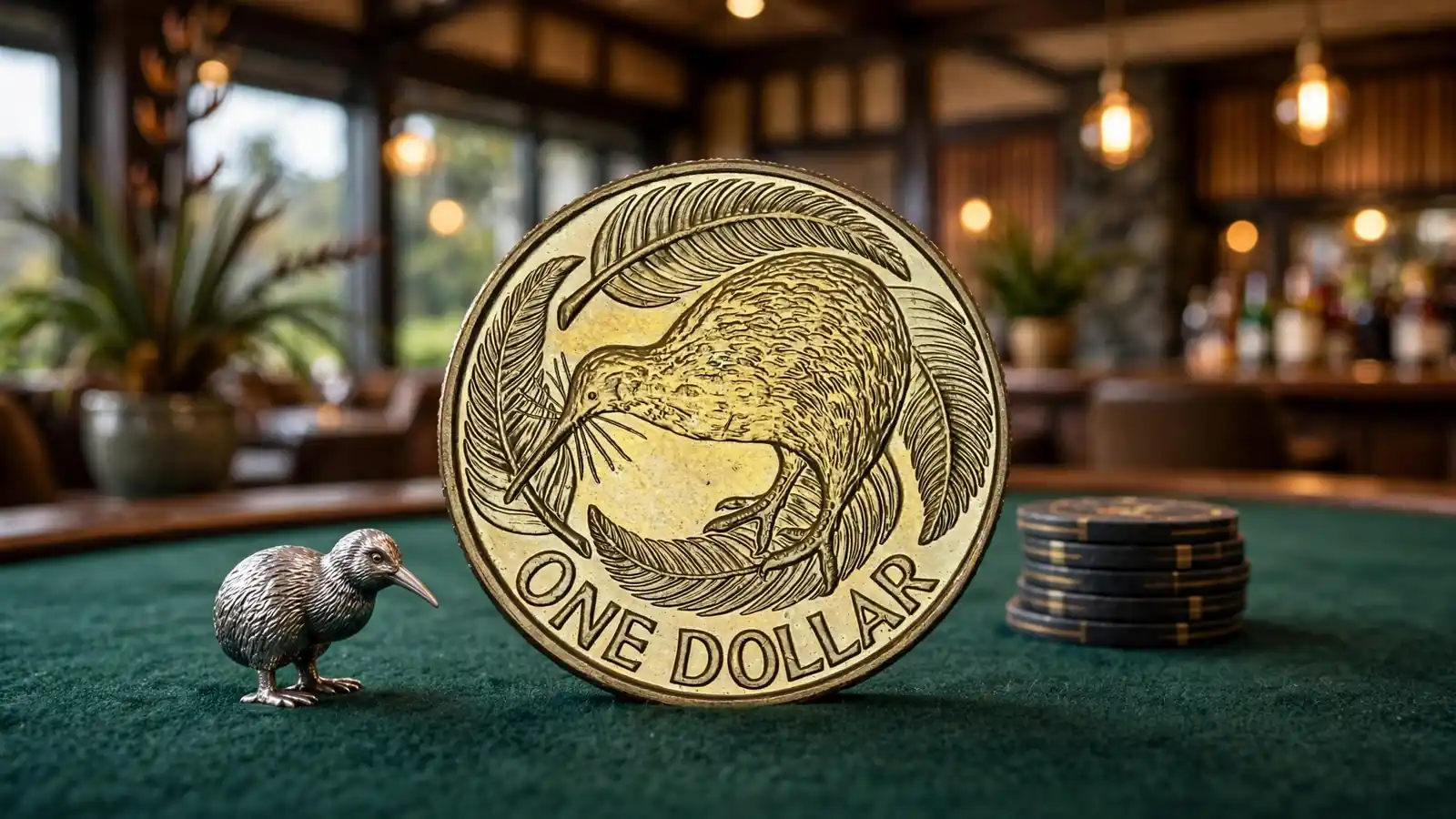
What a NZ$1 Minimum Deposit Really Gets You
A genuine NZ$1 minimum deposit means the casino will accept a payment of one New Zealand dollar as the smallest permitted top-up. It does not mean every casino will take that amount, or that the full dollar will necessarily appear in your balance. Specialist casino reviews describe true NZ$1 minimums as very rare for New Zealand players. So the headline is worth checking carefully: a site can mention a dollar in its marketing while setting a higher minimum for the actual deposit.
The distinction is simple but easy to miss. A minimum is the lowest amount the casino’s cashier accepts under its stated rules. The amount that reaches your account is a separate matter. A payment can carry a transaction fee, leaving you to spend more than NZ$1 to have a dollar credited. The size and source of any fee depend on the transaction, so do not assume that typing “1” into a deposit box is the final cost.
That matters more with a small payment because even a modest charge can outweigh the amount you meant to deposit. If your bank or payment service adds a fee, the total taken from you could be greater than NZ$1 while the casino receives only the intended dollar. The cashier may show the amount it is requesting, but that does not necessarily show every charge applied outside the casino. Check the payment confirmation and your provider’s fee information before approving the transaction.
If you’re looking for a $1 deposit casino in New Zealand in 2026, check the current deposit terms before you pay, as eligibility can depend on the casino’s rules. Use this list as a starting point for deciding what to investigate further.
-
7Bit Casino
- License
- Tobique Gaming Commission, licence no. 0000091
7Bit Casino is listed with a Tobique Gaming Commission licence, number 0000091. Check its current terms to see whether a $1 deposit is available to you.
-
N1 Casino
- License
- Malta Gaming Authority, licence no. MGA/B2C/394/2017
N1 Casino is listed with a Malta Gaming Authority licence, number MGA/B2C/394/2017. Review its current deposit terms to confirm whether they suit your budget.
-
Ricky Casino
- License
- Tobique Gaming Commission, licence no. 0000002
Ricky Casino is listed with a Tobique Gaming Commission licence, number 0000002. Check its current terms for details relevant to your intended deposit.
-
Lamabet
- Payout speed
- 1-3 business days
Lamabet has a stated payout speed of 1–3 business days. If payout timing matters to you, check the applicable terms before depositing.
-
BitStarz
- License
- Curaçao Gaming Authority, licence no. OGL/2024/165/0185
BitStarz is listed with a Curaçao Gaming Authority licence, number OGL/2024/165/0185. Check its current deposit terms to determine whether a $1 deposit is possible.
-
Play Grand
- License
- Malta Gaming Authority, licence no. MGA/B2C/370/2017
Play Grand is listed with a Malta Gaming Authority licence, number MGA/B2C/370/2017. Review its current terms before deciding whether it fits your deposit plans.
-
Neospin
- License
- Tobique Gaming Commission, licence no. 0000064
Neospin is listed with a Tobique Gaming Commission licence, number 0000064. Check its current terms for the deposit conditions that apply to you.
-
Wintino
- Payout speed
- 1-3 business days
Wintino has a stated payout speed of 1–3 business days. Check the applicable terms if payout timing is important to your choice.
-
Zotabet
- License
- 07017519840
- Payout speed
- 1-3 business days
Zotabet has the licence identifier 07017519840 listed. Check its current terms to confirm the deposit conditions before you sign up.
Currency is another part of the calculation. A specialist review reports that some casinos accessible to New Zealand players do not hold accounts in New Zealand dollars. If the cashier displays another currency, your NZ$1 has to be converted before it becomes a usable balance. The exchange rate and any conversion charge can mean the amount debited from your account differs from the amount you expected.
I would treat “$1 deposit” as a claim about the entry point, not a promise that the transaction costs exactly one New Zealand dollar. Look at the currency shown beside the deposit amount, and make sure you understand whether the casino account will be held in NZD or another currency. If the currency is not clear until later in the cashier flow, pause there rather than approving the payment on the assumption that the displayed figure is NZ$1.
There is also a difference between a site accepting a one-dollar deposit in principle and offering that option to every player. A cashier can set a minimum that changes with the selected currency or payment route. A figure seen in a review may therefore be a starting point to verify, not a guarantee that your own account will be offered the same minimum. Specialist coverage is useful for finding rare low minimums, but the live cashier is where the terms for your transaction become visible.

Before depositing, read the amount and currency together. “1” on its own is not enough information: it could refer to a different currency, and the exchange may change what leaves your account. Also check whether the payment provider charges separately. Those checks are not about chasing a bargain; they are about knowing what you are authorising and what the casino will actually credit.
A NZ$1 minimum is therefore a narrow promise. It says that a very small starting payment may be accepted at some casinos; it does not erase fees or currency conversion, and it does not make that amount a practical fit everywhere. The rarity is the first thing to keep in mind. The final cost is the second. A dollar on the button can be more than a dollar out of your pocket.
I would not make a deposit just because the minimum looks small. Confirm the casino’s stated minimum, the account currency and any transaction or conversion costs before you proceed. If the displayed amount is unclear, do not guess. Keep gambling within a budget you can afford to lose, set a time limit, and step away if gambling is affecting your wellbeing. Gambling can lead to addiction.
The Catch Behind a $1 Deposit Bonus
A $1 deposit may be accepted without qualifying for a deposit match. Those are separate rules: one sets the smallest payment the cashier will take, while the other determines how much you must deposit to activate a promotion. It is easy to see a low minimum and assume the bonus starts there. I would check the offer’s eligibility wording before paying, not infer it from the deposit screen.
A specialist review reports that the sites it assessed set deposit-match thresholds at $10 or $20. Treat those figures as reported offer conditions, not a promise about every casino or a permanent market rule. Promotions change, and the terms attached to an offer matter more than a headline saying that a bonus is available. If the minimum qualifying deposit is above your planned top-up, a $1 payment may go into your account without triggering the match.
There is another wrinkle: a site can require a larger first deposit to claim a promotion, then allow smaller top-ups afterwards. The same specialist review describes that distinction. In plain terms, “you can deposit $1” does not necessarily mean “you can claim the bonus with $1.” Check whether the threshold applies to the first payment, to each qualifying payment, or to another step set out in the offer. A small deposit may still be possible; it just may not be the deposit that earns the advertised match.
Find the activation step
Some casino promotions require a promo code. The operator may ask you to enter it during registration or when you make your first deposit. If you skip that step, the offer may not attach to your account automatically. Don’t assume customer support can add it later; read the instructions before creating an account or paying.
I’d look for the exact sequence: whether you need to register first, enter a code, choose the offer, and then deposit. The wording can distinguish between “eligible” and “activated.” Those are not interchangeable. A promotion might be visible on the page but still require you to take a particular action before it applies.

Also check whether the offer is limited to a first deposit. If it is, a qualifying payment made before you activate the promotion could leave you unable to use it as intended. The important point is not to rush through the cashier. A few lines of terms can decide whether the $1 deposit is simply a top-up or part of a bonus claim.
Read beyond the match amount
A deposit match is not the same as cash you can withdraw straight away. Welcome offers can come with wagering requirements: conditions that require you to place bets before bonus funds or related winnings become withdrawable. The amount of play required, which bets count, and whether the rules treat bonus funds differently from your own deposit can all affect what the offer is worth to you.
The terms may also set a deadline. A specialist review describes a welcome offer with a 30-day period for meeting its wagering requirements. That is an example of a reported condition, not a deadline that applies to all offers. Check the specific promotion for when its clock starts and what happens if you have not met the requirements by the stated date.
It’s worth checking the rules in one sitting, before you deposit. Find the qualifying deposit, any required code, the wagering conditions and the expiry period. If one of those details is unclear, the advertised match alone does not tell you enough to decide. A bonus can look generous while its conditions make it a poor fit for the way you intended to play.
Do
- Find the qualifying deposit amount
- Check for any required promo codes
- Verify the wagering conditions
- Note the expiry period
Don't
- Assume the match starts at $1
- Rush through the cashier process
- Ignore the bonus activation steps
- Overlook the withdrawal deadlines
Keep your own deposit separate in your thinking from the promotional balance. Receiving a match does not mean every dollar shown in the account is available to withdraw, and completing one part of an offer does not automatically settle all its conditions. The terms say what must happen before a withdrawal is allowed.
A $1 deposit bonus in NZ is therefore not just a question of whether the cashier accepts a dollar. The offer has its own entry point and rules. If you only want to add a small amount, confirm that the bonus threshold matches that plan. If it does not, you can decide whether to deposit without the promotion or leave it alone. No need to force the fit.
Playing for Real Money on a Tiny Starting Balance
A NZ$1 deposit can get you into a real-money account, but it does not give you much room to play. The key distinction is between getting started and having enough balance to keep going. If a game’s minimum bet is the same size as your entire deposit, one wager can use it all. That is a thin margin for a new player who is still learning how a game works.
Online poker and blackjack are examples where the minimum bet can be $1. At that level, a one-dollar balance does not stretch across a session: it may be committed in a single hand or round. Even if you intend to play cautiously, the table minimum sets the floor. Check it before joining rather than assuming every game will let you stake a fraction of your balance.
A small starting balance can also make each decision feel bigger than it is. A win may briefly lift the balance, but it does not change the amount you originally deposited or guarantee that you will keep the gain. A loss can bring play to an end quickly. I would treat the dollar as money you are prepared to lose, not as a test that can reliably produce a larger bankroll.
That matters especially for a new player. You may be getting used to the rules, the interface and the difference between a cash balance and promotional funds at the same time. Keep those things separate in your head. The figure shown in an account can combine money with different conditions attached, and the total does not necessarily mean that all of it is ready to withdraw.
Bonus money is not the same as cash you can take out. A specialist review notes that winnings from free spins or bonus funds may have to meet wagering requirements before withdrawal. In practice, that means you need to read the promotion’s terms and see what applies to the credited amount and any winnings it produces. A balance can appear available for play while still being subject to conditions. Don’t count it as withdrawable until those conditions have been met.
The same applies if a promotion makes a small deposit look more substantial. The extra balance may extend play, but it can also come with rules that do not apply to your own deposited money. Keep track of which funds are yours and which are promotional. If the account display or terms make that unclear, pause before playing rather than treating the whole number as a cash-out amount.
There is a separate question from how small the deposit is: how long a particular game lets it last. The minimum stake determines how quickly the balance can be used; the deposit amount alone cannot answer that. Poker and blackjack with a $1 minimum are poor fits for a player trying to make one dollar last, because the minimum already matches the full starting balance. That does not make a different game a way to secure a return. It only changes how much of the balance a single permitted wager may use.
I would set a firm budget and a time limit before opening a game, then stop when either is reached. A tiny deposit can still lead to losses, and gambling can become addictive. Do not top up to chase a loss or to meet a bonus condition. If you feel pressure to continue, step away. One dollar is a small amount, but the habit of trying to win it back is the part worth watching.
For a first real-money session, make the practical checks in order: understand whether the balance is cash or bonus funds, confirm the minimum bet, and decide in advance what you are willing to lose. If the minimum wager would use the full deposit, you already know what kind of session that creates. Small stake, short runway.
How to Judge a $1 Casino Beyond the Deposit
A low minimum deposit tells you what you may be able to put in, not whether the whole transaction makes sense. Before paying, I’d look at what happens when you want to take money out: how long a withdrawal can sit pending, whether a fee applies, which currency the account uses, and the minimum amount you must reach before cashing out.
Read the withdrawal terms first
Processing times can vary sharply. One specialist review describes withdrawals as either instant or taking one to three business days, depending on the casino. Another specialist review gives a broader span, from two minutes to seven days. Those are reported ranges, not a promise about the next request you make. Check the operator’s own terms for its current process, and look for any distinction between the casino approving a request and the payment provider sending the money.

The distinction matters. A request marked as processed may still need time to reach your account. If the terms do not say when the clock starts, or what can delay approval, do not treat a short headline estimate as the full story. That is the part people miss.
Fees deserve the same attention. A withdrawal charge may depend on the payment method, so check the relevant terms rather than assuming that a small deposit means a small or free cash-out. Look for whether a fee is taken from the amount you request or charged separately. If the wording is unclear, ask support before depositing and keep the answer.
Find the cash-out threshold
The minimum withdrawal is separate from the minimum deposit. A site can accept a dollar and still require you to build a larger balance before it will release funds. Find that threshold before you play, and check whether different payment methods have different minimums. If you cannot locate the rule in the cashier or withdrawal terms, treat that as a reason to pause—not as evidence that there is no threshold.
I would also check what happens to a balance below the minimum. The important point is simple: a small first payment does not guarantee that any resulting balance can be withdrawn straight away. Read the cash-out condition alongside the deposit requirement, not after you have already made a payment.
Check the account currency
Some casinos that take New Zealand customers do not display balances in New Zealand dollars. A specialist review notes that this can leave you exposed to exchange-rate costs when money is converted. Check the currency shown in the cashier and the currency your payment method will use. A conversion can change the amount charged or credited, so the figure you see at the start may not be the final amount that leaves your account.

Put the checks together: withdrawal timing, possible fees, the minimum cash-out amount and currency conversion. That gives you a clearer view of the full transaction than the deposit label alone. I would not call any $1 option the best on the basis of its entry amount; the cash-out terms are part of the deal.
Set a spending budget and a time limit before you start. Gambling can lead to addiction, and a small deposit does not remove that risk.
Online Casino Rules in New Zealand in 2026
New Zealand’s online casino rules are changing during 2026, so an option that appears accessible is not automatically authorised to serve local players. The Online Casino Gambling Act 2026 took effect on 1 May, establishing the framework for domestic licensing. It also created a transition period for providers that were already serving New Zealand before that date: they may continue until 1 December, subject to the Act’s transitional provisions.
That date matters if you are looking at an online casino with a $1 deposit. A low minimum does not tell you whether the operator is entitled to take New Zealand customers. During the transition, the permission to keep operating applies to existing providers, not any site that happens to accept a New Zealand payment. From 1 December, offshore operators that have not applied for a licence must stop taking New Zealand players.
A specialist review reports that licensed online casino operations are scheduled to begin on 1 December 2026. Treat that as a reported timetable, rather than proof that every part of the new system will be settled that day: the full licensing regime is not expected to be fully operational until 2027. The practical point is to pay attention to the operator’s status and the date, not just the deposit button. A dollar can be accepted by a website without making its position under New Zealand law clear.
There is a payment change too. Under the new rules, credit cards cannot be used for online casino payments. That restriction applies to the payment route, not just to a particular minimum deposit, so a card option shown on a page should not be taken as permission to fund casino play with it. The rules also change what can be offered to New Zealand players, even if an offshore site remains technically reachable.
POLi needs a separate note. A specialist review reports that it is no longer offered at New Zealand online casinos. If you remember it as a local payment option, don’t assume it remains available just because an older page or discussion still mentions it. Payment menus can lag behind regulatory changes.
Before the new Act, offshore online casino gambling was not licensed or supervised by a New Zealand regulator, and customers had no domestic government recourse if a dispute arose. The Act introduces the country’s first domestic licensing regime, but the transition does not instantly turn every accessible site into a locally licensed one. The distinction is easy to miss when a cashier accepts a small deposit. Not the same thing.
So if you are asking what casino can take a $1 deposit, separate two questions: whether the cashier accepts that amount, and whether the operator is permitted to serve New Zealand players at that point in the transition. Those are different checks. A payment method, a familiar brand or a working account does not answer both.
PayPal, Paysafe and Other Ways to Pay a Dollar
PayPal or Paysafe appearing in a casino’s cashier does not, by itself, mean you can use it to deposit NZ$1. The cashier’s minimum applies to the transaction, and the payment provider may also reject a charge that small. Check the deposit screen for the exact floor before choosing a method; a payment option can be available while a one-dollar payment is not.

A specialist review of payment options for New Zealand counted about ten methods that would clear a single-dollar deposit. Treat that as a limited snapshot, not a promise that the same methods will be available to you. Some payment services do not process a transaction of that size at all, and the options shown can vary between casinos. Small print matters here.
Apple Pay is not a route to a NZ$1 deposit, according to a specialist payment review. So if you see it listed, do not assume its presence makes a dollar-sized top-up possible. The same practical check applies to PayPal and Paysafe: confirm the minimum displayed in the cashier, and make sure the casino accepts the method for your account and currency before you authorise anything.
Skrill and Neteller have payment floors that, in specialist reviews, generally sit above NZ$1, though some reported exceptions accept a dollar. That does not make the exception universal. Check the specific casino’s terms rather than relying on a payment brand’s name or on another player’s experience.
POLi is another name you may come across in older New Zealand payment guides. A specialist review reported that it is no longer offered at New Zealand online casinos, so an old reference should not be taken as evidence that you can use it now.
Before making a small deposit, look at the amount that will actually be charged and the amount that will reach your casino balance. A provider’s fee or currency conversion can make a one-dollar credit cost more than a dollar. If the cashier rejects the amount, do not keep trying with different settings; check the stated minimum or choose another available route.
I would treat a one-dollar payment as a narrow test of whether a method works, not as proof that every later transaction will go through the same way. Payment availability can change, and the cashier is the place to verify it. Set a spending and time limit before playing; gambling can lead to addiction.
Can I use Apple Pay for a $1 deposit?
No, according to a specialist payment review, Apple Pay is not a route to a NZ$1 deposit.
Which e-wallets generally have higher minimums?
Skrill and Neteller payment floors generally sit above NZ$1, though some reported exceptions exist.
Is POLi still available at NZ online casinos?
No, specialist reviews report that POLi is no longer offered at New Zealand online casinos.
Free Spins on a $1 Deposit: Read the Offer Carefully
A large free-spin figure can make a one-dollar offer look more generous than it is. The key is to check what deposit actually unlocks the spins, rather than treating the biggest number in a welcome package as the reward for any payment.
A specialist review describes offers with 50, 80 or 100 spins, and even a 150-spin headline, in connection with small-deposit promotions. But it also makes an important distinction: no single NZ$1 deposit pays 150 free spins. That larger count belongs to a welcome package, not to a one-dollar payment on its own. Read the deposit steps carefully; the spins may be attached to a higher qualifying deposit or to a package that unlocks in stages.
The same issue can arise when spins are advertised alongside a deposit match. A specialist review notes that the combined welcome offer unlocks across larger deposits. So a page showing a match and a bundle of spins does not, by itself, mean that the smallest deposit gets the whole bundle. Look for the exact deposit tier tied to the spin count, and whether the offer must be claimed or activated.
Then check what happens after the spins are used. Winnings from free spins may not be withdrawable straight away: the offer can require further wagering before you can cash out. The spins and the winnings are separate parts of the promotion, and completing the spins does not necessarily complete the withdrawal conditions. The operator’s terms should spell out which winnings are subject to wagering and what steps remain.

I would treat the headline count as a starting point, not a cash value. If the offer page does not clearly connect a spin total to a qualifying deposit and explain the conditions on resulting winnings, pause before opting in. A big number is easy to print. The terms matter more.
Keep any deposit within a budget you can afford to lose, and set a time limit before you start. Gambling can lead to addiction.
Deposit $1, Get $20? Check the Thresholds First
A “deposit $1, get $20” headline can make the smallest payment sound like the key to the whole welcome offer. It may not be. The amount shown in an offer is not necessarily what you receive for depositing a dollar; the offer can unlock in stages as your deposit increases.
One specialist review reports that most sites it examined set the minimum deposit for a deposit match at $10 or $20. The same review describes welcome packages combining a match with free spins, with the package becoming available across larger deposit levels. That is a specific report, not a promise about every casino or an enduring market rule.
So, before treating a small deposit as a way to claim the advertised total, find the offer’s deposit tiers. Check which tier a $1 payment actually falls into and whether it qualifies for any part of the match. If the terms show that the match starts at a higher deposit, a one-dollar top-up does not unlock it. The large figure on the banner may describe the full package, not the result of the smallest qualifying payment.
I’d read the offer table rather than rely on the headline. A casino may accept a small deposit for play while setting a separate, higher threshold for its welcome package. Those are different conditions. The phrase “deposit $1, get $20” is only meaningful if the offer’s terms explicitly connect that deposit to that reward.
This distinction matters when comparing new $1 deposit casinos in New Zealand: a low entry amount alone tells you nothing about how much of a welcome package you can claim. Don’t increase your deposit just to chase a headline. Set a budget and time limit before playing; gambling can lead to addiction.
Mobile Play, Pokies and the Skrill Minimum
A $1 deposit does not buy the same amount of play in every game, even when you are using a phone. The key difference is the minimum stake: some poker and blackjack tables set it at $1. At that level, one hand or round can use your entire starting balance. That is a short session.
Pokies can have smaller wagers, with some games allowing bets from $0.10. That can make a dollar last longer, but it does not mean every pokie has that minimum or that every mobile casino accepts a one-dollar deposit. Check the game’s bet controls and the cashier’s deposit limit separately. A game’s low stake does not lower the payment minimum.
Skrill is another place where the numbers can catch you out. A specialist casino review reported Skrill and Neteller minimum deposits commonly starting between NZ$20 and NZ$30, while identifying some exceptions that accept NZ$1. Treat those exceptions as specific to the operator and its current cashier, not as a general Skrill rule. Confirm the available minimum before you try to pay; seeing Skrill listed does not guarantee a one-dollar transaction will go through.
On mobile, it is easy to mix up three separate things: the amount you can deposit, the minimum bet for a game, and whether that game is available on your device. Check each one before putting money in. I would not choose a site just because its pokie page shows small stakes; the payment floor may still be higher.

Keep a budget and a time limit, and stick to both. Gambling can lead to addiction. A small deposit changes the size of the starting balance, not the risk.
Visa and Your First $1 Deposit
Using Visa for a first NZ$1 deposit sounds straightforward: enter your card details, choose the amount and wait for the account balance to update. But card availability and the minimum transaction size are separate things. A casino may display Visa as a payment option without accepting a one-dollar charge through it.
A specialist review of tested operators reported that Visa, Mastercard and e-wallet deposits of $1 took between 24 and 48 hours to process. Treat that as a reported result, not a promise about every card, bank or casino. The payment may also be declined before processing if the casino or card issuer does not allow a charge that small.
I’d check the cashier before making a first deposit. Select the card option, enter the amount if the page allows it, and read any minimum shown before confirming. If the cashier sets a higher floor, changing the amount after entering card details won’t make it a $1 deposit. Check that the account currency is NZD as well, so the amount you intend to send is clear.
The same review reported the same 24–48-hour processing window for e-wallet deposits of $1. That does not mean every e-wallet will accept the amount; some payment methods may not process a one-dollar transaction at all. The useful distinction is simple: a method can be listed, yet reject the amount you want to send.
For a first payment, confirm the minimum in the live cashier and check your bank’s pending transactions afterward. If the casino does not clearly show whether a $1 card payment is accepted, pause rather than guessing. A listed logo is not confirmation.
Do I need a bonus code for a $1 deposit?
You may need one if the promotion requires a promo code. Check whether to enter it during registration or with your first deposit, and follow the activation steps before paying.
Are there restrictions or limitations associated with $1 deposit casinos?
Yes. A $1 deposit may not qualify for a deposit match, which often requires $10 or $20, and some payment methods cannot process a $1 transaction. Fees, currency conversion and wagering requirements can also affect what you receive or withdraw.
What payment methods can players use to make a $1 deposit at these casinos?
Some Visa, Mastercard and e-wallet options can process $1 deposits, but the available choices are limited and some methods have higher minimums. Skrill and Neteller usually start at NZ$20–NZ$30, with some exceptions; Apple Pay does not enable a NZ$1 deposit.
Is a dollar worth it?
It can give you a small amount of play, especially on pokies with wagers as low as $0.10. But fees or currency conversion can cost more than the deposit, and many poker and blackjack games have a $1 minimum bet.
Can I win real money with a $1 deposit?
Yes, you can win, but a win is not guaranteed. If your winnings come from bonus funds or free spins, you generally need to meet the wagering requirements before withdrawing them.
Casino Payments in New Zealand: Deposit Methods
Content created by the «casinoslotsinfonz.com» team