
Read the table before placing a Bitcoin wager
 Available in US
A practical look at roulette formats, betting interfaces and crypto payments, with a focus on separating game rules from payment features.

What Makes a Bitcoin Roulette Game Feel Different
The Bitcoin label tells you how a site may handle deposits; it tells you very little about the roulette game itself. When I compare tables, I start with the wheel and the rules, then look at how clearly the game presents them. A polished screen can make a game feel smooth, but it cannot make its rules better.
Start with the wheel format. Roulette games may use different wheel layouts, and the layout affects the available outcomes and the house advantage. Check the game’s own rules rather than relying on a thumbnail or a short label. If the rules page is hard to find, or the layout is not clear before you play, that is useful information in itself.
The betting area matters just as much. Look for a clear distinction between bets placed on individual outcomes and bets covering groups of outcomes. The interface should make it easy to see what you selected and what is at risk before you confirm a spin. A crowded table, tiny labels or unclear chips can turn a simple decision into guesswork. I would rather use a plain layout that shows my bets properly than a flashy one that hides them.
Pay attention to how the game explains its rules. Does it describe the available bets, payouts and any special table rules in ordinary language? Are the instructions visible before play, or buried in a help menu? A familiar roulette layout is not a substitute for checking how that particular game works. Small differences in rules can change the meaning of a bet, even when the table looks familiar.

The result display is another practical comparison point. After a spin, you should be able to tell what happened and how the game settled your bet without hunting through menus. Clear records of recent rounds can help you follow the game, but a sequence of past results does not predict what comes next. A roulette history is a record, not a forecast.
Then there is the pace and presentation. Some games keep the screen spare; others add animations, sound and visual effects. None of that changes the underlying roulette rules, but it can affect how easy the game is to follow. I look for controls that stay readable and a pace that gives me time to check a selection. If the interface nudges you to act before you have read the table, the design is doing more than decorating.
A useful comparison is whether the game lets you inspect its details without starting a paid round. Some pages offer a free-play mode, while others use language such as “free” or “no deposit” to describe a promotion. Those phrases are not interchangeable. Free play may be practice with no cash value; a promotional offer may come with conditions. Read what the mode actually provides, especially whether any displayed balance can be withdrawn. A faucet-style label is not, by itself, proof that a game gives you Bitcoin.
That distinction matters when you are looking for a way to try roulette without committing funds. A practice mode can help you learn where the controls are and how the table displays outcomes. It cannot show that a game is fair, make results predictable or turn a promotion into spendable cryptocurrency. Treat the label as a prompt to read the terms, not as a promise.
Do
- Check the game's own rules page
- Look for clear bet distinctions
- Verify if free-play is actually practice mode
- Ensure table markings are legible on your device
Don't
- Rely on thumbnails or short labels
- Use a flashy layout that hides your bets
- Confuse promotional offers with free play
- Confirm a wager without reviewing the bet
I also compare how the game behaves on the device I intend to use. Are the table markings legible on a smaller screen? Can you review a bet before confirming it? Do menus cover the betting area? These are not glamorous questions, but they matter when a quick tap can commit a wager. A game that looks tidy on a large display may be awkward on a phone.
“Best” is personal here. One player may prefer a minimal table with straightforward controls; another may care more about detailed rules and a calmer pace. There is no single feature that makes a roulette game best for everyone, and a Bitcoin payment option does not make the roulette itself distinctive. Compare the rules, layout, clarity and presentation, then decide which trade-offs you are comfortable with.
For Kiwis, there is one local point worth keeping separate from the game comparison: local casinos are not allowed to offer crypto games. That does not change how a roulette wheel works, but it does mean the Bitcoin label should not be mistaken for a local casino feature. Keep the product description and the roulette rules in view. They answer different questions.
Bitcoin Roulette in New Zealand: The 2026 Rules in Plain English
If you’re looking for bitcoin roulette options in New Zealand in 2026, use this list as a starting point for checking which operators meet your needs. Confirm the games, payment methods and terms directly before you choose.
-
7Bit Casino
- License
- Tobique Gaming Commission, licence no. 0000091
7Bit Casino is listed with a Tobique Gaming Commission licence, number 0000091. Check directly whether its current offering suits your bitcoin roulette plans.
-
N1 Casino
- License
- Malta Gaming Authority, licence no. MGA/B2C/394/2017
N1 Casino is listed with a Malta Gaming Authority licence, number MGA/B2C/394/2017. You can verify its current games and payment options before playing.
-
Ricky Casino
- License
- Tobique Gaming Commission, licence no. 0000002
Ricky Casino is listed with a Tobique Gaming Commission licence, number 0000002. Check its current terms and offering to see whether it fits your needs.
-
Lamabet
- Payout speed
- 1-3 business days
Lamabet’s stated payout speed is 1–3 business days. Check whether the payout details apply to your preferred payment method.
-
BitStarz
- License
- Curaçao Gaming Authority, licence no. OGL/2024/165/0185
BitStarz is listed with a Curaçao Gaming Authority licence, number OGL/2024/165/0185. Review its current offering and terms before deciding if it suits you.
-
Play Grand
- License
- Malta Gaming Authority, licence no. MGA/B2C/370/2017
Play Grand is listed with a Malta Gaming Authority licence, number MGA/B2C/370/2017. Check its current games and payment options directly.
-
Neospin
- License
- Tobique Gaming Commission, licence no. 0000064
Neospin is listed with a Tobique Gaming Commission licence, number 0000064. You can check its current offering and terms to assess whether it meets your needs.
-
Wintino
- Payout speed
- 1-3 business days
Wintino’s stated payout speed is 1–3 business days. Confirm the details for your chosen payment method before you play.
-
Zotabet
- License
- 07017519840
- Payout speed
- 1-3 business days
Zotabet is listed with licence number 07017519840 and a payout speed of 1–3 business days. Check which payment methods the stated payout timing covers.
The key distinction is between the rules for the business taking your bet and the rules for you as a player. New Zealand’s reforms are aimed at online casino operators. They do not make it an offence for an individual Kiwi to visit an offshore casino, and people here are not currently barred from using cryptocurrency to gamble on those sites.
That does not mean an offshore Bitcoin roulette casino is regulated at home. Offshore crypto casinos do not hold licences from the Department of Internal Affairs (DIA), and they have no domestic New Zealand regulatory oversight or consumer protections. Before the new framework, online casino gambling supplied from outside New Zealand was not licensed or supervised by a New Zealand regulator. If a dispute arose, customers had no domestic government recourse. That gap matters, even though using an offshore site is not itself prohibited.
Why the dates can look inconsistent
There is a genuine clash in the way the 2026 change is described. One account says the Online Casino Gambling Act 2026 came into force on 1 May 2026. Another says the Online Casino Gambling Bill 2026 takes effect on 1 December 2026. Those dates should not be collapsed into a single event: the Act’s commencement and the later start of the licensing requirement are described separately.
The legislation passed its third reading on 23 April 2026. Under the transitional provisions, online casinos that were already serving New Zealand customers before 1 May may continue doing so until 1 December 2026. New offshore operators have been barred from entering the market since 1 May. In other words, the transition is not an open invitation for new providers to start taking bets.

A specialist review describes 1 December 2026 as the point from which operators seeking to offer online casino gambling legally to people in New Zealand need a licence under the Act. It also describes the new domestic framework as capped at 15 licences. Treat those details as a description of the coming operator rules, not as evidence that offshore casinos are already licensed here. The full licensing regime is not expected to be operational until 2027, and unlicensed operation is expected to become an offence around mid-2027.
What the change means for players
The Online Casino Gambling Act 2026 establishes New Zealand’s first domestic licensing framework for online casino gambling. The Department of Internal Affairs administers the regime. Its purpose is to regulate providers, with stricter age and identity checks required of licensed operators; it does not turn the act of playing at an offshore casino into a crime.
That distinction is easy to miss when a site talks about “legal” Bitcoin roulette. A cryptocurrency payment method does not make a casino New Zealand-licensed, and a foreign licence is not the same as domestic oversight. During the transition, the existing operators covered by the transitional provisions may continue until the December date. After that, the licensing rules become the relevant standard for providers seeking to operate legally here. The timetable for the full regime extends into 2027.
New Zealand also prohibits online casinos from being based domestically under the Gambling Act 2003. The 2026 law creates a path to domestic licensing for online casino providers, rather than making local online casinos a long-standing feature of the market. Keep that separate from land-based gambling and from the question of whether a player may access a site based overseas.
For you, the practical legal line is therefore about who is offering the game, not whether the roulette balance is denominated in Bitcoin. Offshore casinos are accessible to New Zealand residents, but they do not gain local supervision simply because they accept Kiwis. You also do not get the protections attached to a New Zealand-regulated operator when wagering with an offshore site. That is the trade-off.
The minimum gambling age in New Zealand is 20. That applies regardless of whether the roulette stake is paid in Bitcoin or another currency. So the plain-English version is: the law is tightening around operators, the transition ends on 1 December 2026, and the new licensing system is expected to become fully operational in 2027. Players are not currently prohibited from using offshore casinos, but those casinos are not covered by New Zealand’s domestic protections.

Live Bitcoin Roulette: What Happens at the Table
Live roulette puts a dealer, wheel and ball on screen while you follow the round through a casino interface. You choose your wager in that interface; the dealer sets the wheel in motion, and the result is determined by where the ball settles. The video gives you a view of the table, while the on-screen layout lets you place bets without reaching across the felt.
That is the main difference from automated roulette. In an automated game, software runs the round and displays its result; there is no live dealer handling the wheel in front of a camera. Both formats use the familiar roulette layout, but the pace and presentation feel different. Automated rounds can move straight from one result to the next. A live table has a dealer-led rhythm, with time for the betting stage, the spin and the result to appear on screen.
If you are looking for live Bitcoin roulette, think of “Bitcoin” as the payment method associated with the casino account, not as a special kind of wheel or bet. The live format describes how the game is presented. It does not, by itself, tell you which cryptocurrency the casino accepts, how a deposit is handled, or whether a particular table is available to you. Those details are separate from what happens during a round.

At the table, the useful thing is to keep your attention on the betting layout and the round’s status. The interface should make clear when betting is open and when it has closed; after that, you watch the spin and wait for the result to be recorded. If you are new to live play, the dealer’s pace can make the game feel more social than an automated screen, but it can also make it easier to lose track of how quickly you are placing wagers. I’d decide what you intend to stake before joining, rather than letting the table’s rhythm make that decision for you.
“Fast spin” is a different expectation. Someone wanting a rapid succession of results may prefer an automated game, where the round is not paced by a live dealer. A live table cannot be assumed to move at the same speed: the dealer’s actions and the betting window are part of its format. The label alone does not establish that a live game has a fast-spin option, so check the game screen’s rules and controls rather than expecting a particular feature.
The video is also not a substitute for checking the game’s own information. Read the displayed rules for the table you are considering, including its betting options and any limits shown there. Do not assume that every live roulette table uses identical rules or offers the same interface. A familiar wheel can still come with differences in presentation and available choices.
For a smoother session, make sure you can see the full betting layout and understand how the interface marks your selections before a round begins. If the screen is cramped or the labels are unclear, pause instead of placing a wager by guesswork. The dealer’s presence makes the experience feel closer to a physical table; it does not change the basic need to know what you have selected.
Live play, then, is about the human-led presentation and the pace of the table, not a separate form of Bitcoin roulette. You can watch each spin unfold, but the game remains roulette: choose your bets through the interface, follow the round, and treat the video as presentation rather than a promise about speed or special features.

Playing Roulette with Bitcoin, from Wallet to Wager
Before you play roulette with Bitcoin, treat the deposit as a transfer that needs careful checking, not as a card payment you can reverse if you spot a mistake. The steps are straightforward, but the address and network have to match the casino’s instructions exactly.
A specialist review describes the basic flow this way: choose Bitcoin as the payment method, copy the casino’s deposit address, then send the funds to it from your own personal wallet. Don’t send directly from a crypto exchange. Before confirming, compare the address you pasted with the one shown by the casino and make sure the selected blockchain network is the one the deposit instructions require. A wrong address or network can leave the funds unrecoverable.
I take a moment here rather than trusting the first screen. Check the asset, network and destination address together; a correct-looking address alone is not enough if the network is wrong. Transaction fees vary with network activity and the cryptocurrency used, so review the amount and fee in your wallet before approving the transfer.
Once sent, the deposit is not necessarily available in your casino balance straight away. The transaction first needs blockchain confirmation, after which the casino credits the account. That confirmation is separate from any casino-side handling: the blockchain records the transfer, while the casino’s system recognises and applies it to your balance. If the funds do not appear, keep the transaction details and check the payment status before attempting another transfer. Sending a second payment in a hurry can create a second problem.
For a withdrawal, the direction changes. Enter the amount and the wallet address where you want to receive the Bitcoin, then submit the request. Check that address carefully before confirming. A specialist review describes withdrawals as requiring casino approval before the funds are sent; only after dispatch does blockchain processing begin. So a request marked as pending is not the same thing as a transaction already moving through the network.
That distinction matters when you are trying to work out where a delay sits. Before approval, the casino still has to process the request. After it sends the funds, confirmation depends on the blockchain. A quick deposit does not tell you how quickly a withdrawal will be approved: the two transfers have different steps.
Bitcoin Deposit Process
-
1
Select Method
Choose Bitcoin as your payment method in the casino cashier.
-
2
Copy Address
Copy the casino's deposit address and paste it into your personal wallet.
-
3
Verify Details
Compare the pasted address and the selected blockchain network with the casino's instructions.
-
4
Confirm Transfer
Review the amount and transaction fee in your wallet before approving the transfer.
Keep the withdrawal details and any status messages until the payment reaches your wallet. If the casino shows that it has sent the funds, use the transaction reference to check the blockchain status rather than submitting another withdrawal request. If it has not been sent, the question is still with the casino, not the network.
Bitcoin European roulette follows the same payment path as another roulette format; the table choice does not change how a deposit or withdrawal is handled. Keep the wallet check separate from the game choice. One is a transfer; the other is a wager.
Low-Stakes Bitcoin Roulette and the Strategy Trap
A small deposit can make roulette feel easier to keep in check, but the casino’s minimum deposit and the table’s minimum stake are different things. A specialist casino review places many Bitcoin-casino minimum deposits in the NZ$10–NZ$30 equivalent range. Treat that as a reported range, not a promise about every site: the amount can differ, and a deposit that meets the site’s entry requirement may still leave little room to play.
Before deciding what “low stakes” means for you, check the table rules and the minimum bet shown on the roulette layout. Then consider how many bets your available balance can cover at that stake. A low deposit does not automatically mean low-cost play if the minimum wager is larger than you expected, or if you keep adding funds after the balance runs down.
I’d set a spending limit before opening the table and stick to it. The point is not to make the balance last as long as possible at any cost; it is to decide in advance what you are comfortable losing. If the minimum bet does not fit that limit, that table is not a good match for a low-stakes session.

The strategy trap is thinking a betting pattern can turn a small bankroll into a reliable edge. Systems that raise or lower stakes after wins or losses change the size of your bets, not the underlying roulette outcome. A run of losses can also make a recovery plan harder to follow precisely when you are most tempted to chase. No staking pattern guarantees a win or removes the risk of losing the money you set aside.
That matters especially with Bitcoin roulette, where the balance is displayed in cryptocurrency or converted to a cash equivalent. Keep your budget in the same terms you used to set it, and do not treat a temporary run of wins as permission to raise your limit. The aim of a small stake is to keep each decision manageable, not to prove that a system works.
If you are comparing roulette sites that accept Bitcoin, focus on whether their stated minimum deposit and table minimum suit your budget. Do not choose a larger deposit just to make a betting strategy seem workable. A smaller starting balance can limit how much you put at risk, but it cannot make the game predictable. Keep the limit firm.
Bitcoin Roulette Games, Lightning and a Volatile Balance
“Bitcoin roulette” describes roulette played with Bitcoin as the payment currency; it does not, by itself, identify a different set of roulette rules. The game might be automated or dealer-led, but that is a question of format. Lightning is different: it is a Bitcoin payment network, not a roulette variant or a special way to play the wheel.
That distinction matters when a payment option appears beside a game. A casino may show Bitcoin among its cashier choices, but that alone does not establish that it accepts Lightning. Check the payment instructions for the specific network before sending anything. A Bitcoin address and a Lightning invoice are not interchangeable, and using the wrong route can leave a payment unresolved.
Lightning is intended to handle Bitcoin transactions through a separate payment layer. Whether it is available depends on the service and the instructions presented to you; do not assume support from a Bitcoin logo or from the words “Bitcoin roulette.” If a cashier offers more than one Bitcoin route, read the details rather than picking the one that sounds quicker.
There is also the value of the balance to consider. A specialist review notes that a balance held in a volatile cryptocurrency can rise or fall in value between deposit and withdrawal. The number of Bitcoin in your account may be unchanged while its value in New Zealand dollars moves. So the amount you set aside for a game is not necessarily worth the same amount when you later convert it.
That movement can work in either direction. It is separate from the result of a roulette spin: a win or loss changes the amount of cryptocurrency you hold, while the market price changes what that amount is worth. Keeping those two effects distinct makes it easier to see what happened to your funds.
Network choice can also affect transaction costs. Fees vary with network activity and the cryptocurrency used, so the amount arriving may not match the amount you expected to spend unless you account for the fee shown before confirming. A faster payment route, where available, does not remove price movement or make a roulette outcome more predictable.
I would treat the cashier’s network label and the balance’s local-currency value as separate checks. First make sure the payment method matches its instructions; then decide whether you are comfortable holding the resulting crypto balance while its value can change. Lightning changes the payment route, not the game or the financial risk.

Roulette Alongside Blackjack: Keep the Games Separate
A casino page may put roulette and blackjack next to each other, and a Bitcoin payment option may appear beside both. That does not make them one game or a special combined format. Roulette is built around a wheel and where the ball lands; blackjack is a card game in which you make decisions against the dealer. The shared setting is the casino, not the rules.
I find it helps to choose the game before thinking about the payment method. If you want roulette, look for a roulette table or game and read its rules. If you want blackjack, check the blackjack rules separately. A Bitcoin balance is simply a way some offshore casinos let customers fund play; it does not change what counts as a roulette bet or a blackjack hand.
That distinction matters when you see both games advertised together. “Live” may describe a format offered for one or both, but it does not mean a roulette table has turned into blackjack. Nor does seeing Bitcoin mentioned beside the games establish that every table accepts it. Check the terms for the particular game and payment option rather than assuming a shared feature.

Keep your own session just as separate. Decide which game you intend to play, and do not switch to blackjack because a roulette session has gone badly, or the other way around, as if a different set of rules could repair the result. They are different games, but neither provides a reliable way to recover losses. A change of table is not a reset button.
There is also a local point worth keeping in view: the minimum gambling age in New Zealand is 20. That applies to gambling, whether you are looking at roulette, blackjack or another casino game. If you are below that age, do not open an account or try to play.
Kiwis sometimes ask whether winnings from an online casino have to be treated like ordinary income. Recreational gambling winnings in New Zealand, including winnings from a crypto casino, are generally not subject to income tax. “Generally” matters: that is not a personal tax ruling, and it does not turn gambling into a dependable source of income. A win can be followed by a loss; the game does not know what you need the money for.

So, when roulette and blackjack sit side by side, treat them as two separate choices. Read the rules for the one you actually want, keep the age requirement in mind, and do not mistake a shared Bitcoin payment option for a shared game. Different tables. Different decisions.
Bitcoin Cash Roulette and the Withdrawal Wait
Bitcoin Cash is a separate cryptocurrency from Bitcoin, even though the names are easy to mix up. If a roulette account offers both, treat them as different payment choices: a Bitcoin Cash address and a Bitcoin address are not interchangeable. Before requesting a payout, check that the casino supports Bitcoin Cash withdrawals and that the address and network match its instructions. A wrong-network transfer can turn a routine cashout into a costly problem.
The wait has two parts. First, the casino reviews and approves your withdrawal request. Only after it sends the funds does blockchain processing begin. A completed approval does not mean the money has already reached your wallet; it means the operator has authorised the transfer. Keep the request status and transaction record until the incoming payment is visible.
Timing claims need context. One specialist casino review reports that Bitcoin withdrawals at the operators it assessed took between five and thirty minutes after approval. That is a report about Bitcoin, not a dependable estimate for Bitcoin Cash, every operator or the time spent waiting for approval. The same review describes approval periods ranging from two hours at one named casino to as long as two days at another. Those are individual operator claims, not a market-wide timetable. Check the payment terms shown by the casino you use.
A delay may therefore sit with the casino rather than the blockchain. A pending review, an account check or a request for identity documents can hold up release. Crypto deposits do not guarantee that a casino will skip identity verification. If a request has not moved, check whether the operator is waiting for information before assuming the network is at fault.

Fees also vary with the cryptocurrency and network activity, so the amount arriving may not match the amount requested. And the value of a crypto balance can change between deposit and withdrawal. That matters even when the number of coins stays the same.
For live roulette, the game format does not change how a Bitcoin Cash withdrawal is approved or transmitted. The cashier’s stated payout method and your chosen currency are what matter. Keep the receipt. Then wait for the right stage to finish.
Using a Bitcoin Roulette App Without Cutting Corners
A roulette app can feel like a shortcut, but installing it is still a security decision. Start from the operator’s official website or a trusted app store, and check the publisher name before downloading. If you are offered an APK file, remember that it bypasses the app store’s review process. Don’t install one from a link in a message or an unfamiliar download page; a polished icon proves very little.
I’d also check what permissions the app requests. Access to features unrelated to casino play deserves a second look. Keep your device’s operating system and security software updated, use a unique password for the casino account, and turn on two-factor authentication (2FA) where available. Set deposit limits in the account if the casino provides them. These steps do not make an operator safe, but they reduce the risk of someone else getting into your account or wallet.
Keep a dedicated crypto wallet for gambling rather than mixing casino funds with everyday holdings. Don’t store its recovery phrase in a screenshot, email, or note that syncs across devices. If you use an APK, take extra care: a fake app could expose login details or wallet information before you notice anything wrong. Small shortcut, potentially costly.
Crypto payment does not mean anonymous play. A specialist review reports that casinos may request identity documents before a first withdrawal, for a large cashout, or when a security check is triggered. Be wary of any assumption that a Bitcoin deposit removes the possibility of verification.
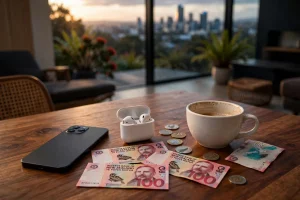
An app is only a way to access a service; it does not give an offshore casino New Zealand regulatory oversight or domestic consumer protections. That distinction matters if something goes wrong. Before entering account details, check who operates the app, whether its download source matches the operator’s own site, and whether you can reach support without handing your recovery phrase to anyone. No legitimate support request should need it.
Bitcoin Roulette, Dice and What “Trust” Can Actually Mean
Roulette and dice-style games may both appear in a Bitcoin casino lobby, but they are different games. Roulette centres on a wheel, a ball and bets on where the ball will land. A dice game instead uses a digital roll or another dice-based outcome. The shared payment method does not make their rules, odds or mechanics interchangeable.
That distinction matters when a site uses broad labels such as “Bitcoin games.” Open the game rules and check what determines the result, what bets are available and how a winning wager is settled. If the explanation is vague, the label tells you very little. A dice game is not a roulette variant just because both accept cryptocurrency.
The word “trust” needs the same care. A site might describe a game as provably fair, but that claim is not proof on its own. Look for a clear explanation of how results can be checked and what information you need to do so. If you cannot understand the process or independently follow it, treat the claim as unverified rather than assuming it guarantees fairness.
Payment handling is a separate check. A specialist casino review describes deposits as being credited once the blockchain confirms the transaction, while a withdrawal first requires the casino’s approval before funds are sent to your wallet. That tells you about the payment sequence, not whether a roulette result was fair. Keep those questions apart.
Before sending funds, check that the casino gives clear instructions and that you can track the transaction. Remember, a visible blockchain transfer confirms that funds moved; it does not verify the game’s outcome or the operator’s conduct. Fees also vary with the cryptocurrency and network activity, so the amount sent and the amount ultimately credited may differ.
If the site blurs game rules, fairness claims and payment status into one promise of “trust,” pause. Plain explanations matter.
Are Bitcoin casino winnings taxable in New Zealand?
Generally, no. Recreational gambling winnings, including crypto casino winnings, are not subject to income tax in New Zealand.
Is it legal to play at offshore Bitcoin casinos in New Zealand?
Yes. New Zealand law targets operators, not individual players, and Kiwis are not currently prohibited from playing at offshore sites. These casinos are not licensed or overseen by New Zealand’s Department of Internal Affairs.
Is crypto gambling legal in New Zealand?
Individuals are not currently prohibited from using cryptocurrency to gamble at offshore online casinos, but local casinos cannot offer crypto games. From 1 December 2026, operators wishing to legally offer online casino gambling in New Zealand will need a licence.
Slots in New Zealand: Online Pokies and Casinos
Content created by the «casinoslotsinfonz.com» team