
Choose a roulette table with the details in view
 Available in US
A practical guide to roulette wheel differences, online formats and key considerations for playing with real money.
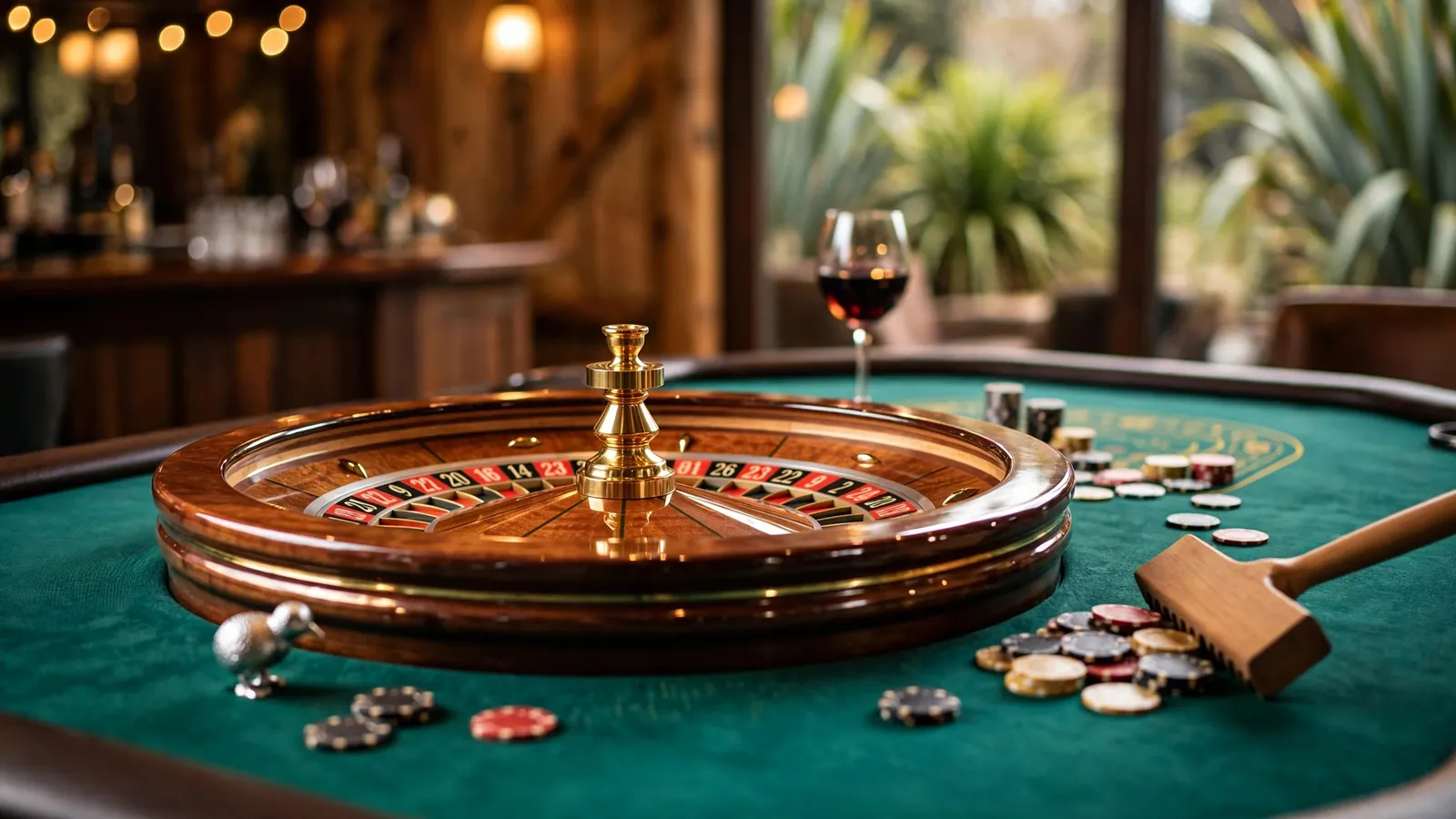
Roulette Wheels: European, American and French
When you sit down to a casino roulette game, the first thing worth checking is the wheel itself. The names European, American and French do not just label different presentations of the same table: they point to differences in the number layout and, in the French version, rules that apply to certain bets. I’d start there before worrying about the look of the table or its interface.
European roulette: one zero
European Roulette has 37 numbered pockets, including a single zero. That gives the wheel one green zero pocket alongside the numbered pockets. The single-zero layout is the useful detail to remember: it is the feature that distinguishes the European wheel from the American one.
If you are choosing between casino roulette games and want the simpler layout to recognise at a glance, European Roulette is straightforward. Find the zero and you have identified the key feature of this version. The remaining pockets carry the numbered outcomes. Their exact arrangement around the wheel is not what separates European roulette from the other versions here; the count and the single zero do.
Choosing a roulette casino in New Zealand is easier when you can check the available operator details before deciding where to play. Use this list as a starting point for your own review.
-
7Bit Casino
- License
- Tobique Gaming Commission, licence no. 0000091
You can note that 7Bit Casino lists a licence from the Tobique Gaming Commission, licence no. 0000091.
-
N1 Casino
- License
- Malta Gaming Authority, licence no. MGA/B2C/394/2017
N1 Casino lists a Malta Gaming Authority licence, no. MGA/B2C/394/2017, a useful detail for you to consider when reviewing the operator.
-
Ricky Casino
- License
- Tobique Gaming Commission, licence no. 0000002
Ricky Casino lists a Tobique Gaming Commission licence, no. 0000002, which gives you a specific licensing detail to check.
-
Lamabet
- Payout speed
- 1-3 business days
Lamabet lists a payout speed of 1–3 business days, giving you a stated timeframe to consider.
-
BitStarz
- License
- Curaçao Gaming Authority, licence no. OGL/2024/165/0185
BitStarz lists a Curaçao Gaming Authority licence, no. OGL/2024/165/0185, for you to take into account when reviewing the operator.
-
Play Grand
- License
- Malta Gaming Authority, licence no. MGA/B2C/370/2017
Play Grand lists a Malta Gaming Authority licence, no. MGA/B2C/370/2017, a specific detail for you to consider.
-
Neospin
- License
- Tobique Gaming Commission, licence no. 0000064
Neospin lists a Tobique Gaming Commission licence, no. 0000064, which you can use as part of your operator review.
-
Wintino
- Payout speed
- 1-3 business days
Wintino lists a payout speed of 1–3 business days, providing you with a stated timeframe to review.
-
Zotabet
- License
- 07017519840
- Payout speed
- 1-3 business days
Zotabet lists licence number 07017519840 and a payout speed of 1–3 business days, giving you both details to consider.
That can make European Roulette a sensible starting point for someone who wants to learn the names and basic differences among roulette tables. It is also a familiar version across many casino games. Just do not assume that a European label means every table will look or behave identically in every other respect. The defining point is the 37-pocket, single-zero wheel.
American roulette: an extra zero
American Roulette has 38 pockets: a single zero and a double zero, as well as the numbered pockets. The additional green pocket is the obvious difference when you compare its layout with the European wheel. On a table, check for both zero labels rather than relying on the game’s title alone.
That extra pocket is why the American version is not simply European roulette with a different graphic. The wheel has a different set of possible landing places, and the double zero is part of its identity. If you are deciding which casino roulette game to open, checking the pocket count tells you more than the decoration around the table.
It is easy to overlook a second zero when you are focused on the numbered area or the controls. I make a point of checking the wheel before settling in. One extra pocket, plainly visible; no mystery there. For a player comparing the main roulette variations, that is the entire layout distinction to keep in mind: American has 38 pockets and two zeros, while European has 37 and one.

French roulette: one zero, with added rules
French Roulette also uses a 37-number wheel with a single zero, so its basic pocket count matches European Roulette. Its notable difference is the availability of La Partage and En Prison for even-money bets. Those rules affect what happens to a qualifying bet when the ball lands on zero; they do not add another pocket or change the wheel to a double-zero layout.
La Partage and En Prison are French terms you may see in a game’s rules or table information. They are worth recognising before you choose a French table, because they describe conditions attached to certain even-money bets. The key point is that these rules are not a separate wheel design. French Roulette retains the single-zero layout, with these additional rules available for particular bets.
The names can sound like minor table settings, but they are part of what makes the French version distinct. If the game displays a rules panel, check whether La Partage and En Prison are included and how the table describes their application. The feature concerns even-money bets, not every possible selection on the table.
A quick way to tell them apart
Think of the choice in two parts: pocket layout first, rules second. European Roulette has 37 pockets and one zero. American Roulette has 38 pockets, with both a single and a double zero. French Roulette has 37 pockets and one zero, like the European version, while also offering La Partage and En Prison rules for even-money bets.
European Roulette
37 pockets with a single zero.
American Roulette
38 pockets with a single zero and a double zero.
French Roulette
37 pockets with a single zero and La Partage or En Prison rules for even-money bets.
That comparison is enough to identify the main versions without getting bogged down in table graphics. A green zero is present in all three; the question is whether the wheel has one zero or two, and whether the French rules are part of the game. The American wheel is the outlier on pocket count. The French version shares the European count but adds rules that matter to a defined category of bets.
If you are browsing a casino roulette game menu, the version name is a useful first clue, but it is still worth checking the displayed rules. Game labels can sit beside different table presentations, and a quick look at the wheel and its information panel confirms what you are opening. I find that easier than trying to infer the version from the table’s colours or style.
For a first pass, keep the distinctions plain: European means a single-zero, 37-pocket wheel; American means 38 pockets, including a double zero; French means a single-zero, 37-pocket wheel with La Partage and En Prison available for even-money bets. No need to make it more complicated than that.
How to Play a Round of Roulette
A roulette round is built around one simple choice: where you think the ball may land. You can select a single number or choose a combination of numbers shown on the betting layout. Your chips mark that choice. Once the bets are placed and the wheel is spun, the ball decides the result. You are betting against the house, not trying to outplay another person at the table.

Get familiar with the layout
The betting layout sits beside the wheel and repeats its numbered pockets in a format you can use to place bets. Take a moment to find the number you have in mind and look at how the surrounding areas are arranged. You do not need to memorise the layout before joining in; the point is simply to match your chip to the place that represents your selection.
A bet on one number is the most direct choice: you mark that number on the layout. You can also select a group or combination of numbers, using the marked areas that correspond to those choices. Each bet is tied to the part of the layout covered by your chip. If you are unsure what a particular marked area represents, ask the dealer before placing anything. A quick check is better than discovering after the spin that you backed a different combination from the one you intended.
Place your chips before the spin
At a physical table, players use differently coloured chips so their wagers can be distinguished from one another’s. Place your chip or chips on the part of the layout for your chosen number or combination. The betting happens before the wheel is spun; once the spin begins, the opportunity to add or move a bet for that round is over.
That order matters more than it sounds. Decide what you want to back first, then put the chip on the matching area. Avoid dropping it between markings or covering a spot so the dealer cannot tell what you intended. If your chip lands awkwardly, clarify its position before the round moves on. Don’t guess.
How to Play
-
1
Choose your bet
Select a single number or a combination of numbers on the betting layout.
-
2
Place your chips
Put your chips on the chosen area of the layout before the wheel is spun.
-
3
Follow the spin
Wait for the ball to land in a pocket and see if it matches your selection.
In an online game, you make the same basic choice using the on-screen betting layout and controls rather than physical chips. The format may look different, but the purpose is unchanged: select a number or combination and place the bet before the spin. The individual game will show how to select and confirm a wager on its screen.
Follow the result
After bets are placed, the wheel is spun and the ball comes to rest in a pocket. The winning result is the number where the ball lands. Your selection is then compared with that result: a bet covering it wins, while a bet that does not cover it loses. The house runs the game and settles the round according to the bets made.
You do not control the wheel by choosing a number, and you cannot adjust a bet once the spin is underway. Your part is to select the area you want to cover and place your chips in time. The dealer or game interface handles the result and settlement. If you are at a table, watch how the dealer clears the previous round and opens betting again; it helps you follow the rhythm without rushing.
For a first round, keep the decision uncomplicated. Pick a number or a clearly marked combination, check that your chip is in the right place, and wait for the spin. You can take time to observe a round before betting if the table’s pace feels unfamiliar. Watching one spin can make the sequence easier to follow, but it does not tell you where the next ball will land.
What “playing against the house” means
Roulette is not a contest in which you need to beat the other players. Everyone at the table may choose different numbers or combinations, but each wager is settled against the house based on the result of the spin. Other players’ choices do not change the place your own chip covers.
If you came looking for how to play Russian roulette at a casino, note that Russian roulette is not a casino game. Casino roulette is the wheel-and-ball game described here. They share a name, not a set of rules.
It is also worth separating playing correctly from winning. Knowing where to place a chip helps you take part in a round, but it cannot make a particular result happen. Choose your bet, place it before the spin, and let the result stand. That’s the round.
What to Check Before Playing Roulette for Real Money
Before you sit down at an online roulette table, get the account and payment basics straight. Kiwi players need to sign up and deposit funds before they can play roulette for real money. That first step is simple enough; the important part is knowing what you are agreeing to and how money will move in and out.
- Sign up for an account
- Deposit funds
- Read the account terms
- Verify the operator's status
- Check available payment methods
Check the operator’s status
New Zealand’s online casino rules are in transition. The Online Casino Gambling Act 2026 took effect on 1 May 2026 and introduced the country’s first domestic licensing framework. Existing providers may continue operating during the transition, which runs until 1 December 2026. The full licensed system is not expected to be operating until 2027.
That means a familiar-looking site should not automatically be treated as locally licensed. Before opening an account, check what the operator says about its status and where it is based. New Zealand does not permit online casinos to be based domestically. Before the new Act, offshore casino gambling was not supervised by a New Zealand regulator, and customers had no domestic government recourse if a dispute arose. The transition changes the legal framework, but it is still worth understanding who is taking your deposit.
Read the account terms before registering
Take a moment to check the operator’s account conditions and the steps it requires before you can use the account. Make sure the details you provide are accurate, and check what documentation may be requested for account checks or withdrawals. It is easier to sort out a mismatch before depositing than when you are trying to access your balance.
Look for the rules on account closure and self-exclusion, too. You should be able to block access to your account temporarily or permanently if you need a break. I would also set a budget and session-time limit before making a deposit, rather than deciding what feels manageable while a game is open. Keep to the plan; do not chase losses or spend more than you intended.
Check payment details before depositing
The cashier page is where a small oversight can become an annoying one. Confirm which deposit and withdrawal methods are available to you, along with any fees, limits and currency-conversion terms. Do not assume that a method shown in a general help page is available for your account or in New Zealand. Skrill and Neteller deposits are not options to rely on here.
Check how withdrawals are handled before you put money in. The payment route, account details and any operator requirements can affect whether a withdrawal goes smoothly. If anything is unclear, ask the operator before depositing, and keep a record of the terms you saw. A payment option is only useful if you understand both directions: money in and money out.
Some offers may be accessible with a $10 minimum deposit, according to a specialist casino review. Treat that as a specific offer detail, not a standard entry amount across roulette sites. If an offer is attached to registration, read its conditions separately; roulette eligibility can vary, and the headline is not the whole deal.
Finally, make sure the site works for you before committing funds: can you find the account terms, contact support and locate the withdrawal information without hunting around? I use that as a basic test of whether the operator is being clear. If the essentials are buried, pause. A deposit can wait.
Roulette Tables and Formats You Can Play Online
When you look for roulette at an online casino, the useful distinction is often how the game is presented, rather than the name of the casino. You may come across a conventional single-wheel table, a live presentation, or a format that brings several wheels into one round. The exact selection depends on the games available at the casino, so I check the table description before joining rather than assuming every roulette title works the same way.
For a straightforward session, a standard table keeps the focus on one wheel. That is the familiar format many Kiwi players have in mind when they look for a casino with roulette: choose a table, see its layout, and follow the round on screen. Different tables can still have different presentations, but the basic point is that you are playing around one wheel at a time. If you want a particular roulette variation, check its name in the game information rather than judging by the table’s artwork.
Multi Wheel Roulette is a different format. One specialist review describes it as allowing bets across several wheels in a single round. Treat that as a feature to verify in the individual game’s description, not as something every online casino or roulette table offers. The format lets you follow several wheel outcomes within the same round, but that does not remove the house edge or make a win certain. More activity is not the same thing as a better chance.
You can also encounter roulette presented with a live dealer. That changes how the table is shown, but it is still worth checking the individual game’s details before you sit down. A live presentation is not automatically available at every casino, and the label alone does not tell you what the table offers. I look for the game title and its information first; it saves the small annoyance of opening a table that is not the format I meant to play.
Access is not restricted to a computer. Online roulette games can be used on both mobile devices and desktop computers, so you can choose the screen that suits you. On a phone, the table is viewed on a smaller display; on a desktop, you have a larger screen in front of you. Either way, make sure the game is readable and that you can follow its on-screen information comfortably before starting a session. A table that technically opens is not much use if you have to squint at it.
The same applies when browsing casinos with roulette tables. Rather than relying on a broad claim that a site has roulette, open its game list and confirm which format is actually available. Look for the table name, whether it is single-wheel or multi-wheel, and whether it is presented as a live game. If you are checking from mobile, confirm the title is accessible there too. That is a more practical check than picking a casino based on a banner or a promise of an immersive roulette experience.
I would keep game format separate from payment and promotion decisions. A roulette table being available does not tell you whether a bonus applies to it, and a casino’s general offer does not explain the rules for every game. Check those terms on their own before making a deposit. The table is only one part of the choice.
A little checking goes a long way. Find the format you want, confirm it is available on your device, and read the game details before you join. That is enough to avoid confusing a particular presentation with a different kind of roulette.
Roulette Casinos in New Zealand: Bonuses and the Fine Print
A welcome offer can look generous and still be poor value for roulette. Before counting it as part of your playing budget, check whether table games are eligible at all. A specialist review of New Zealand casino offers describes the vast majority of welcome bonuses as aimed at pokies, rather than table games or live dealer play. That is a useful warning, not a promise about every offer: read the terms for the specific promotion you are considering.
The key detail is how roulette contributes to playthrough requirements. A specialist review notes that bonus terms can differ on whether roulette counts, and on what basis. If the rules exclude roulette, or give it no contribution towards the requirement, playing roulette will not help you clear that bonus. If the terms do include it, look for any conditions attached to that contribution before opting in. Do not assume that “casino games” means every game in the lobby.
I check the offer’s eligibility, wagering requirements, expiry, game contribution and withdrawal restrictions together. These details determine whether you can use the promotion for your preferred game and what you must do before withdrawing. The headline amount cannot answer those questions. Nor can a general banner settle whether a particular roulette table qualifies; the promotion’s written terms are what matter.
Pay close attention to what happens when you request a withdrawal. Any active or pending bonuses are voided when a withdrawal request is made, so an offer may no longer be available after you ask to take money out. Read that condition before accepting a promotion, especially if you might prefer to stop playing and withdraw rather than continue to meet its requirements.
For Kiwi players comparing roulette casinos in New Zealand, the practical test is simple: would you still choose the offer if roulette did not count towards its requirements? If the answer is no, confirm the game contribution and withdrawal rules before opting in. If you cannot find a clear answer, contact the casino before accepting; guessing from the promotion’s headline is a poor way to spend your time.
I treat a bonus as an extra condition, not as roulette funds with no strings attached. Check whether the offer applies to the game you want, how its requirements work, when it expires and what a withdrawal does to it. A promotion that excludes roulette may still suit someone playing pokies, but it is not automatically useful to a roulette player. Fine print is rarely the exciting part. Still worth reading.

Free Roulette, Table Limits and the Martingale
Some online casinos available to Kiwi players offer roulette games you can try for fun without depositing or registering. That makes them useful for getting familiar with a casino roulette table before putting real money at risk. You can explore the layout and see how the game feels, without treating a practice session as a test of whether a betting system will work.
Check what the practice option actually provides. A free game can help you get comfortable with the table interface, but it does not turn roulette into a predictable game or show that a particular approach will produce a return. If you move from practice to real money, pause and check the table’s limits first.
Minimum and maximum bets vary between casinos, so there is no single limit that applies everywhere. The minimum sets the smallest stake the table accepts; the maximum sets a ceiling on what you can wager on an eligible bet. Both matter if you are considering changing your stake after a loss. A plan that depends on being able to keep raising a bet may run into the table maximum, even before your own budget is exhausted.
That is where the Martingale deserves a hard look. The system means doubling your stake after each loss, with the aim of recovering earlier losses when a winning bet arrives. It can sound tidy when described in isolation. In practice, each loss calls for a larger next stake, so the amount committed can grow quickly. A limited budget cannot support an unlimited sequence, and the table’s maximum can stop the progression too.
A win does not make the losses leading up to it harmless. You may be unable to place the next doubled bet, or you may reach the table limit before recovering what you have lost. The system does not change roulette’s underlying uncertainty or guarantee that a recovery bet will arrive in time. Neat on paper. Less so at the table.
If you are trying the approach out of curiosity, decide in advance what you can afford to lose and stop when you reach that amount. Set a session time limit as well, and use daily or weekly deposit limits to keep your spending within plan. Do not chase losses by adding funds or extending a session. If gambling stops feeling manageable, account blocking or self-exclusion can give you a break.
Free roulette is a low-pressure way to get acquainted with the game, not a promise of what real-money play will bring. Before choosing a paid table, make sure its minimum and maximum bets fit your budget without relying on a run of wins.
Playing Roulette Online: RNG and Your Spin
With RNG roulette, the result comes from a Random Number Generator, or RNG. The game does not wait for a physical wheel to turn: software determines the outcome. You choose when to spin, so the timing of your click is yours; it does not give you a way to influence where the ball lands.

That distinction is useful when you are choosing between online roulette games. An RNG table is played through the game interface, while a live table shows a physical wheel and dealer. They may both be called roulette, but the experience is different. Here, you are interacting with software rather than watching a live spin.
I find it helps to keep the two ideas separate: the player controls when to start a spin, and the RNG determines its result. Waiting for a particular moment, clicking quickly, or changing the rhythm of your spins does not turn timing into a prediction. The software-generated result remains random.
If you are comparing options for the best roulette experience online, look beyond the appearance of the game. Check whether the table is RNG-based or live, and make sure you understand which kind you have opened before playing. A polished interface can make a software game feel immediate, but it does not make it a live wheel. Small distinction. Worth noticing.
The same point applies if you are looking for an online roulette casino: the casino name alone does not tell you how a particular roulette game works. Read the game description and look at the table itself. If it is RNG roulette, you decide when to trigger the spin; the generator supplies the outcome. You do not need to treat previous results or the pause before a spin as clues to what comes next.
That is all the RNG changes in the moment: the wheel’s result is generated digitally, and you choose when to start it. Knowing that keeps the interface in perspective. The click is yours. The result is not.
Roulette Tips Without the Betting-System Myths
The useful roulette tips are mostly about making decisions you can live with, not finding a trick the wheel somehow missed. Every spin has a random outcome. No betting system can turn that into consistent winnings, however tidy its chart looks.
If you want a steadier-feeling choice, outside bets are more likely to win than inside bets. That does not make them a safe way to profit: a more frequent win is not a promise of a winning session. Inside bets focus on narrower selections, which can make them appealing if you like a specific number or combination, but they should not be treated as a shortcut to a payout.
I’d decide what I’m comfortable spending before opening a table, then set a session time limit as well as a budget. Daily or weekly deposit limits can help keep that boundary in place. If either limit is reached, stop. Don’t chase a loss, and don’t keep playing just because a win feels close. The wheel does not know what happened on your last spin.
That last point is worth remembering when a number has appeared repeatedly, or has not appeared for a while. Past results do not tell you what will come next. A “What’s Due” display, where offered, is not a prediction tool; treating it as one can make random results look like a pattern.
I’d also avoid staking more simply to recover what has gone. Systems that change bet size may make a session feel organised, but they do not change the randomness of the outcomes or guarantee a return. A plan is useful only if you can stick to its spending boundary.
Do
- Set a budget and session time limit
- Use daily or weekly deposit limits
- Choose bets you understand
Don't
- Chase losses by adding funds
- Use betting systems to predict results
- Stake more simply to recover losses
So keep the aim modest: choose bets you understand, set your limits, and be ready to leave without a win. Roulette can be enjoyable, but it is still chance. No clever sequence changes that.
Live Roulette and Table Limits
A live roulette table can look straightforward to join, but check its betting limits before you sit down. Minimum and maximum stakes vary between casinos, and the range can differ from one table to another. A table’s name or presentation won’t tell you whether its limits suit your budget.
Look for the minimum and maximum shown for the table, then consider the stakes you expect to make. The minimum is the amount you need to be able to place a bet; the maximum sets a ceiling. If either is outside what you planned to spend, choose another table or leave it for another time. There is no prize for squeezing into the wrong limit.
I’d set a budget and a session time limit before joining. Keep those decisions separate from what happens at the table: a run of wins is not a reason to raise your budget, and losses are not a reason to chase them. If the table’s limits make it hard to stick to your plan, that is useful information. Move on.
When you see a live-roulette listing connected with a venue name, check the actual table details rather than assuming the name tells you which limits are available. The important point is the limit displayed for the specific table you intend to join. Casino offerings can change, so check again when you play rather than relying on an old description.
Also consider whether you can set deposit and session controls on your account before playing. Set daily or weekly deposit limits and a time limit that fits your plans. If you need a break, use the option to block account access temporarily or permanently. Those controls are more useful than trying to recover a session that has run past your budget.
Live presentation does not change the basic need to know your limits first. Check them, decide what you can afford, and leave the table if the numbers do not fit. A short pause beats an expensive rethink.
Roulette Odds: The House Edge and Payouts
Casino roulette odds depend on the wheel and the bet. The house edge is the casino’s mathematical advantage over time, not a prediction of what will happen on your next spin. A single result can go either way; the percentage describes the long-run balance.
European Roulette has a house edge of 2.70%, compared with 5.26% for American Roulette. The difference comes from the American wheel’s extra zero: it creates another losing outcome for most bets. European Roulette therefore offers more favourable odds, though neither layout removes the house advantage.
French Roulette has a single-zero wheel and may apply La Partage or En Prison to even-money bets. The stated house-edge figures for those rules conflict: one gives 1.35%, while another gives 2.7%. That disagreement matters when comparing tables, so check the rules shown for the specific game rather than assuming every French table uses the same figure.
For a straight-up bet on one number, the payout is 35:1. That is the payout if the ball lands on your chosen number, not the probability of doing so. On European Roulette, an even-money bet has a 48.6% chance of winning. “Even money” describes the payout, not a coin-flip chance: the single zero keeps the probability below half.
I treat the house edge as a comparison tool, not a promise about any session. It helps explain why wheel choice affects the maths, while the result of an individual spin remains uncertain. A higher payout on a winning number does not, by itself, make that bet more likely to win.
How do you play roulette online for real money?
You need to sign up at an online casino and deposit funds. Choose a roulette game, place your chips on a number or combination before the wheel is spun, and the result determines whether you win.
Can players win real money playing online roulette?
Yes. Roulette pays out when the ball lands on a selection you backed, but each result is random and no strategy guarantees consistent winnings.
What is the best bet in roulette?
Outside bets are more likely to win than inside bets. However, no roulette bet guarantees a win.
Is it possible to win online roulette?
Yes. Online roulette can pay out real-money winnings, and RNG games use a random number generator to determine outcomes.
Do roulette strategies work?
No strategy guarantees consistent winnings because roulette outcomes are random. For example, the Martingale system doubles your bet after a loss, but it cannot ensure you recover previous losses.
Which roulette bet has the best odds in 2026?
Even-money bets on French Roulette with La Partage or En Prison have the lowest stated house edge: 1.35%. These rules apply to qualifying even-money bets when the ball lands on zero.
What is the best roulette game to play?
French Roulette with La Partage or En Prison offers the most favourable stated house edge, at 1.35% for qualifying even-money bets. European Roulette is another favourable option, with a 2.70% house edge.
Casino Games in New Zealand: Roulette, Cards & More
Content created by the «casinoslotsinfonz.com» team